Showing posts with label farmed. Show all posts

Wednesday, January 28, 2009

Guest Blogger: Dennis Pacheco of ChelseaGreen.com on Eating Local or Risk Death?

We have a guest blogger today.  Dennis Pacheco is Web Content Coordinator for ChelseaGreen.com, the Web site of premier sustainability publisher Chelsea Green Publishing. Their books include Sharing the Harvest and Fresh Food from Small Spaces, and they distribute contra-farmer Joel Salatin's books (Everything I Want to Do Is Illegal and others). 

Readers of the Green Luvin' blog probably don't need another inducement to "eat local." Like Chelsea Green's audience, you're probably hip to the whole concept: support local farmers, enrich your community, connect directly with your food, avoid GMO as much as possible (Although they are difficult, if not impossible, to avoid entirely—soy products, anyone?), cut carbon emissions and reduce demand for our dwindling supplies of dirty fossil fuels, etc., etc. But just in case you're having trouble making the case with some of your less sustainability-minded friends, here's a good one: don't get really sick and possibly die.

You hear news reports all the time about Salmonella outbreaks in spinach or some other product that probably originated halfway around the country or halfway around the world, but what exactly is it?

While not always fatal, it's also not pleasant.

From CDC.gov:

Salmonellosis is an infection with bacteria called Salmonella. Most persons infected with Salmonella develop diarrhea, fever, and abdominal cramps 12 to 72 hours after infection. The illness usually lasts 4 to 7 days, and most persons recover without treatment. However, in some persons, the diarrhea may be so severe that the patient needs to be hospitalized. In these patients, the Salmonella infection may spread from the intestines to the blood stream, and then to other body sites and can cause death unless the person is treated promptly with antibiotics. The elderly, infants, and those with impaired immune systems are more likely to have a severe illness.

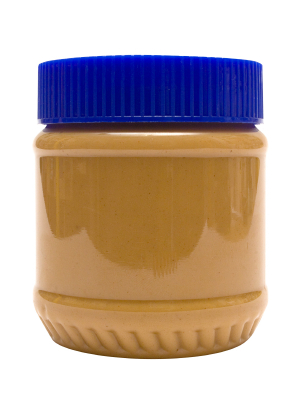
Last Friday, the New York Times reported on the latest headline-grabbing outbreak, this time from peanut butter that originated from a plant in Georgia.

From the New York Times:

For the nation’s grocery shoppers, the list of foods that might contain salmonella-tainted peanut butter has grown so quickly that keeping up seems daunting. 

There are boxes of Valentine’s candy, frozen cookie dough and dog biscuits, chicken satay, peanut butter cups and stuffed celery. 

Many of the products are sold as supermarket brands or under lesser-known national labels, but the list also has some of the more popular snacks on the shelf, like Little Debbie sandwich crackers, Famous Amos cookies and energy snacks from Clif Bar and NutriSystems. 

The Food and Drug Administration has listed almost 130 products that have been recalled, but federal officials say the list is likely to grow as the investigation continues. The large and varied list of products points up the many layers involved in producing packaged foods.

“I don’t think we can determine how many more” products will be recalled, Stephen F. Sundlof, director of the Center for Food Safety and Applied Nutrition at the food and drug agency, told reporters on Wednesday.

Out of 486 cases of salmonella illness reported to the Centers for Disease Control and Prevention, 6 people have died and 107 have been hospitalized. The most recent person sickened fell ill on Jan 8. Since it takes up to three weeks for cases to be reported to the disease agency, more are expected.

Consumers who have packages of food made with peanut products should check with the manufacturer by Web site or telephone and consult the F.D.A. recall list at fda.gov. Anyone who is not sure about a product should not eat it, federal officials said.

[...]

The plant also produced peanut paste, a more concentrated product used in candy, crackers and many other kinds of foods. Tracking how the paste travels through the food supply can be challenging, because several companies can be involved in making the final food. For example, one manufacturer might coat the paste in chocolate and make a peanut butter cup, which is then sold to another company that mixes it into ice cream that may or may not also contain peanut butter. A grocery chain might buy that ice cream and sell it under a private label.

Volume, wide distribution and a complicated supply chain are not the only issues. Salmonella can survive for a long time in a closed container of peanut butter.

“The piece that hasn’t come out yet is that peanut butter isn’t like spinach or ground beef because it has a really long shelf life,” said Caroline Smith DeWaal, food safety director for the Center for Science in the Public Interest.

So remember: eat local. Contribute to the local economy, make an impact on CO2 emissions, avoid GM foods, and greatly reduce the risk of suffering a pretty lousy fate at the hands of an industrial food supply contaminant.

Read the whole Times article here.

Sunday, January 11, 2009

Vote Change One More Time -- For Our Food System

I think many of us agree that our food system is a mess.  Our industrial ways are destroying our environment and health.  We had hope that Obama would pick a Secretary of Agriculture that would be good for our future but that took a down turn. His choice in Tom Vilsack is bad but there appears to be a glimmer of hope, a very small one, that he might become the Secretary of Commerce as reported by the New York Daily News the other day. But to date it appears that is is all rumor. Check out my new favorite blogs, Obama Foodorama, for an explanation on why the Vilsack move is the best choice for America's food system.  I can tell you we are hoping Obama is listening. 

Now there has been a lot of talk lately that the overhaul of our food system is going to take a back burner to the economy. But as Michael Pollan and Grist's Tom Philpott argue, and I agree, investing in a new food system should be part of the economic stimulus package. Ignore it and we continue along, on our way to massive environmental and public health catastrophes. 

In a recent article entitled "Eat the Stimulus," Philpott lays out a plan to overhaul America's food system that he believes would not require a new program or major expenditure of political capital. In short, Philpott suggest that a bulk of the economic stimulus package should go to support local and regional food systems. "Reviving that infrastructure would significantly lower costs for the sort of pasture-based, sustainable meat farmers who are now badly undercut on price by large-scale, environmentally ruinous producers," writes Philpott. He also recommends a reinvestment in our school cafeterias and feed our children healthy, unprocessed food --teaching them that our food comes from the earth not a grocery store. Sounds like a great plan to me but I feel that us sustainable foodies have an uphill battle. 

One way we can try and make a difference is to be a part of the Change.org campaign. On January 16, Change.org and the Case Foundation are co-hosting an event at the National Press Club in Washington, DC to announce the top 10 rated ideas that have been submitted by Americans across the country. They plan on then launching a national campaign behind each idea using the collective energy of the millions of members of Change.org, MySpace, and partnering organizations to ensure that each winning idea gets the full consideration of the Obama Administration and Members of Congress.

Both Eat the View and The Who Farm have been petitioning the next president to plant an organic garden on the White House lawn.  I previously wrote about them in my post entitled "A Victory Garden at the White House?" The two groups have gotten together to put the idea on Change.org and the idea is currently (as I type) in 24th Place and needs 2861 more votes to be part of the final 10 ideas presented at the event in Washington, DC.  

The idea as stated on Change.org, Victory Garden 2.0:
Thousands of Americans and people from the around the world are asking the Obamas to lead by example on climate change, health policy, economic self-reliance, food security, and energy independence by replanting an organic food garden at the White House with the produce going to the First Kitchen and to local food pantries.

The many successes(1) of the first Victory Garden movement were the result of effective public policy, bold leadership(2) at a time of national crisis, and the commitment of millions of citizens who were ready to roll up their sleeves for the greater good.

There' s no better, more symbolic place for launching a new National Victory Garden Program than at the White House, "America’s House". There's no better, more urgent time(3) than now. And there's NOTHING that can beat the fresh taste of locally-grown, home-cooked foods.
The number one idea on Change.org is "Legalize the Medicinal and Recreational Use of Marijuana." Now I am actually in favor of this idea but I do not believe it is worthy of getting the attention that Change.org plans to put forth. There are much greater and important issues. Having a organic garden at the White House will really put the importance of our food system front and center. And then if a majority of American's follow the lead of growing their own food, our agricultural system will be forced to change without the force of the government.  

So please vote.  Voting ends at 5pm ET on January 15th. You can vote by clicking here or click on the image below.  You must register on the site but in only takes one second of your time.  If all of us vote we can definately put Victory Garden 2.o in the top 10.  Let's help make a change in our food system.

Friday, November 7, 2008

An open letter to President-elect Obama.

Dear President-elect Obama, 

After a long, hard and contentious campaign you've won the Presidency of the United States. Congratulations. Take a moment to enjoy your success. Ok, that was long enough. Now let's down to business.  

You well know that you have a long hard road ahead of you, but your first order of business is to choose a cabinet that is strong, thoughtful and will move this country in the right direction. In my opinion, and in the opinions of many people like me, administration environmental jobs should a top order of business. Our crumbling economy will not matter if we cannot breath our air, drink our water, or eat our food. Relieving the credit crunch won't make a difference if rates of obesity, cancer, diabetes, heart disease continue to rise. Keeping people in their homes, empowering people to buy new cars will become meaningless unless we fix the food system, the water system, and limit the spread of untested genetically modified organisms (GMOs). That is why I am calling out to you to take a good look at who you appoint as Secretary of Energy, Head Administrator of the Environmental Protection Agency, Secretary of Interior, Secretary of Agriculture and possibly the new position, Climate Change Czar -- or make this a function of the Department of Homeland Defense.

Of all the cabinet level posts you will fill, there is one that is usually a second thought, but in my opinion is as important as State, Treasury and Defense -- the Secretary of Agriculture. Our food system is in dire need of a change and the right person might be able to help begin the overhaul necessary. 

The Secretary of Agriculture oversees food safety and sets farm policy.  He/she makes recommendations to Congress on which crops should be subsidized, how agricultural laws are enforced, crop-land conservation, and setting the nations nutritional standards and even organic labeling. They also oversee our food stamp program, food distribution during disaster relief efforts, the US Forest Service and the food that is fed to our children in school. That's a big job.

I have read that former Iowa Governor, Tom Vilsack is on the short list for this position. From the corn state, Vilsack strongly supports ethanol subsidies. He believes that he has changed the corn fields of Iowa into energy fields. To me that sounds like a shift in use, not better agriculture or energy policy. As he stated in an op-ed in the Argus Leader, "If you drive across Iowa today, you will see a changing landscape marked by new ethanol and biofuel production plants and wind farms. As a state, we became more economically, environmentally and energy secure." Today, Iowa farmers are still hurting the soil and water by using petroleum-based pesticides and fertilizers. Furthermore, these farmers have shifted corn from feeding the world to ethanol production, which, as we all know, is not helping increase our independence from foreign oil. But with all his good intentions, former Governor Vilsak is too much of an insider to create really change.

I have also read that your short list includes Tom Buis the President of the National Farms Union and the Congresswoman for South Dakota Stephanie Herseth Sandlin. These two are also agriculture "insiders" who are in the pocket of industrial agriculture who might working in the best interest of the farmers they represent, mostly corporate farming, but neither are strong enough or creative enough to achieve real change we need in the system.

Then there is former Congressman Charles Stenholm (D-TX). Charlie is a conservative Democrat that joined the Republicans to kill a bill that would have prevented sick cattle that are unable to walk from entering the US food supply. (Remember the video released by the Humane Society of downer cows?) While part of the House Agriculture Committee he received more than $800,000 in PAC contributions and took numerous trips sponsored by agriculture lobbyist groups. After leaving Congress he became a lobbyist for the agriculture and food industry. Again, not someone who is going to change our system for the better.

So by now President-elect Obama you must say, well then who? There is one man out there who is not already in politics, who has examined our foods system from farm to table, and who understands the impact it plays on our environment, our economy and our health. He has intimate knowledge of not only farmers, but also diaries, feed-lots, and food processors. He is not a Washington insider and to top it off he has already laid out a plan for tackling the issues we face. His plan takes into account the impact agriculture has on our climate, energy dependence, the healthcare system, foreign and trade policies and national security. As states in his own words:
We need to wean the American food system off its heavy 20th-century diet of fossil fuel and put it back on a diet of contemporary sunshine. True, this is easier said than done — fossil fuel is deeply implicated in everything about the way we currently grow food and feed ourselves. To put the food system back on sunlight will require policies to change how things work at every link in the food chain: in the farm field, in the way food is processed and sold and even in the American kitchen and at the American dinner table. Yet the sun still shines down on our land every day, and photosynthesis can still work its wonders wherever it does. If any part of the modern economy can be freed from its dependence on oil and successfully resolarized, surely it is food.
The scribe of this plan called the Sun-Food Agenda is Michael Pollan, the Knight Professor of Journalism at the Graduate School of Journalism at UC-Berkeley, director of the Knight Program in Science and Environmental Journalism and author.

President-elect Obama I urge you to read Professor Pollan's plan as laid out in an article in the New York Times Magazine entitled "Farmer In Chief" and stick with what you have been saying throughout your campaign, that America needs real change. I urge you to consider Michael Pollan for the Secretary of Agriculture. (Or at least consult with him to mine his knowledge on the issues to make the best choice possible for the position.)

Pollan's plans are not liberal.  They are not conservative.  They are what is best for America.  And most importantly they are achievable.

As Pollan states:
[The] sun-food agenda promises to win support across the aisle. It builds on America’s agrarian past, but turns it toward a more sustainable, sophisticated future. It honors the work of American farmers and enlists them in three of the 21st century’s most urgent errands: to move into the post-oil era, to improve the health of the American people and to mitigate climate change. Indeed, it enlists all of us in this great cause by turning food consumers into part-time producers, reconnecting the American people with the American land and demonstrating that we need not choose between the welfare of our families and the health of the environment — that eating less oil and more sunlight will redound to the benefit of both.
This is a new era for America and Michael Pollan may just be The Change We Need.

Yes We Can!

Best,

Green Luvin'

Sunday, November 2, 2008

A Victory Garden at the White House?

The next U.S. president is going to have the daunting task of fixing all that has gone wrong in this country. However, I believe that both candidates are overlooking an extremely important issue -- our food system. As Michael Pollan said on WNYC's Leonard Lopate Show, “It’s true that neither candidate has talked about food policy very much. Some of the issues they have talked about — energy independence, climate change and the health care crisis — I think they will find, as soon as they get into office, that you can’t deal with any of those three problems without dealing with the food system.” 

Last month Pollan wrote an article in the New York Times Magazine which was an open letter to the next president called "The Farmer In Chief" where he laid out what is wrong with our food system and what needs to changed. The article has too many important points to lay out here so please read it.  However, I will highlight one. Pollan concludes his piece with saying that the White House needs to set an example for the rest of the world. I am a firm believer in setting an example for others whether they be our children, our friends or for the next president -- the country.  

Pollan recommends that the next President needs to create a new post -- White House farmer -- who would be in charge of five acres of the White House lawn that would be turned into an organic fruit and vegetable garden. This may sound silly but as Pollan points out back in 1943 Eleanor Roosevelt started the Victory Garden movement, vegetable and fruit gardens planted to ease the burden on the food system during World War II. According to Pollan, by the end of the war more than 20 million home gardens were supplying 40 percent of the produce American's consumed. Victory Gardens today can help reduce our dependence on fossil-fuels and help address the problems of climate change.  

Well Pollan is not the only one who thought of using the White House as a national organic garden  -- two groups Eat the View and The Who Farm are petitioning the next president to plant an organic garden on the White House lawn.  

"Eat the View" is a campaign to plant healthy, edible landscapes in high-impact, high visibility places; whether it's the "First Lawn" or the lawn in front of your child's school. "Eat the View" is coordinated by Kitchen Gardeners International, a Maine-based 501c3 nonprofit network of 10,000 gardeners from 100 countries who are inspiring and teaching more people to grow some of their own food. Roger Doiron the founder of Kitchen Gardeners International just wrote his own letter to the next president entitled "Message to the candidates: Listen to Roger the Gardner" stating the importance of this issue.

TheWhoFarm (aka The White House Organic Farm Project) is a non-partisan, petition-based initiative who is requesting that our next president oversee the planting of an organic farm on the grounds of the White House. The farm will be a model for healthy, economical and sustainable living everywhere and serve as an educational tool and economic aid, and as a means to provide food security in the Nation’s Capitol while reconnecting the Office of the Presidency to the self-sufficient agricultural roots of America's Founding Fathers. TheWhoFarm have been traveling around the country educating Americans on the importance their mission in TheWhoFarmMobile, two school buses fused together with an organic edible garden on the roof.

Instead of a President that loves jelly beans or one that runs to McDonald's to get a Big Mac or one who hates broccoli, how about a president that walks out his front door and picks his own lunch -- or a least his farmer and chef do! Please sign both petitions. You can find the The WhoFarm petition by clicking here and the Eat the View petition by clicking here.

And don't forget to vote on Tuesday.  


Sunday, October 5, 2008

1908 Ford Model T vs. 2008 Ford Pick-Up

On October 1st, 2008, the Ford Model-T turned 100-years-old.  Back in 1908, the year my grandmother was born,  this "universal car" as Henry Ford called it, became the first mass-produced car and the symbol of low-cost reliable transportation. But more important than it's centenial, the Model T got 13-21 MPG (max speed 45 MPH), and it was the first flexible-fuel vehicle, running on gas, ethanol or both. According to Model T collector Stu Chaney of the Model T Ford Club of America who appeared on the The CBS Saturday Early Show, "It will run on moonshine, gasoline, kerosene, diesel fuel-- about anything you can put a match to. And, whatever it runs on, it would pass today's very strict emission standards, because it burns the complete charge in the combustion."

Call me crazy but why are we no better off 100 years later? According the the US Department of Energy's website, FuelEconomy.gov, the 2008 Ford Ranger Pick-Up gets 15 MPG (highway, city combine).  I drive a Acura MDX and hardly ever go above 45 MPH and I am only getting about 15 MPH, and neither of these cars are Flex-Fuel vehicles.  

Are you kidding me?  So the 100 year-old Model-T does better on fuel efficiency than cars made today and its a flex-fuel automobile.

Henry Ford knew there was a future in alternative fuel.  In 1925 he told the New York Times that "The fuel of the future is going to come from fruit like that sumach out by the road, or from apples, weeds, sawdust -- almost anything. There is fuel in every bit of vegetable matter that can be fermented. There's enough alcohol in one year's yield of an acre of potatoes to drive the machinery necessary to cultivate the fields for a hundred years."

In the late 1920's, Ford began to test crops for their industrial potential.  He actually used soybeans in gearshift knobs and horn buttons. This process of creating industrial products from agricultural raw materials is called Chemurgy.  Coined by the chemist William J. Hale, chemurgy in the 1930's during the Great Depression, many farmers and others were advocating the link between farm and industry. In 1935, the Farm Chemurgic Council (later renamed the National Farm Chemurgic Council) was formed to encourage greater use of renewable raw materials in industry. This sounds like a good idea to me.  If you've read some of my other blogs, you know that I feel strongly about the pervasive nature of petrochemicals in our everyday lives.  

So tell me what happened in the past 100 years.  Well, after Henry Ford began producing the Model-T oil-based gasoline emerged as the dominant fuel due to it availability, price, and of course lobbying from petroleum companies to maintain steep alcohol taxes. According to Hemp Car Transamerica (don't laugh this is both legit and important):  "Many bills proposing a National energy program that made use of Americas vast agricultural resources (for fuel production) were killed by smear campaigns launched by vested petroleum interests."  So big oil killed big agriculture's bid for our gas tanks?  We're dependent upon foreign oil due to American big oil efforts.

Hemp Car Transamerica continues, "One noteworthy claim put forth by petrol companies was that the U.S. government's plans 'robbed taxpayers to make farmers rich'. Gasoline had many disadvantages as an automotive resource. The 'new' fuel had a lower octane rating than ethanol, was much more toxic (particularly when blended with tetra-ethyl lead and other compounds to enhance octane), generally more dangerous, and contained threatening air pollutants. Petroleum was more likely to explode and burn accidentally, gum would form on storage surfaces and carbon deposits would form in combustion chambers of engines."  So this fuel is less efficient, dirtier, and more dangerous.  Great choice America.

Finally, Hemp Car Transamerica concludes,  "Pipelines were needed for distribution from 'area found' to "area needed". Petroleum was much more physically and chemically diverse than ethanol, necessitating complex refining procedures to ensure the manufacture of a consistent "gasoline" product. However, despite these environmental flaws, fuels made from petroleum have dominated automobile transportation for the past three-quarters of a century. There are two key reasons: First, cost per kilometer of travel has been virtually the sole selection criteria. Second, the large investments made by the oil and auto industries in physical capital, human skills and technology make the entry of a new cost-competitive industry difficult."

Back in 1974, the EPA began the Miles Per Gallon rating system.  In a 1999 press release announcing the 25th Anniversary of the rating system, the EPA Administrator Carol M. Browner stated, "Choosing the most fuel-efficient vehicle within a class can save drivers at least $1500 [in 1999] in fuel costs and avoid more than 15 tons of greenhouse gas pollution [in 1999] over the life of the vehicle as well as help reduce U.S. dependence on imported oil."

Well only now in 2008, 100 years after the first Model T rolled off the manufacturing line, are Americans and our government, seeing the health, economic and environmental effects of not listening to Henry Ford's original vision.  Well I'm not sure about this?  Are we leading the world, or or we lagging behind?  Can you guess?

Currently one country in Asia has fuel efficiency standards of 43 MPG.  Another has mandated 35.5 miles per gallon by 2010. Those crazy Europeans have mandated 47 MPG by 2012, and Australia is 34.4 by 2010.  But the US is waiting until 2020 to require cars to go 35 MPG. 

Guess who is at 43 MPG?  THE CHINESE.  Yes China, the land of coal fired power plants popping up like weeds is WAY ahead of us in this area.

Time to go vote.  Let your Senator or Congressperson know how you feel about this.  Now is the time.  Think Green on November 2. 

Sunday, September 28, 2008

The Week in Green

I decided that there is so much "green" news out there each week that I would update you on what I think are the most interesting stories and topics.  So each week I will publish "The Week in Green."

If there is something that you think is interesting, topical or important, please post it to the comments here, on my Facebook Group (Green Luvin') and/or my Facebook blog, Green Luvin'.  You can also follow me on Twitter @Green_Luvin.

The Week in Green...

Be Green and Vote:  In most states you have until the end of the week to register to vote in the Presidential election.  Some say "why should I vote"?  No matter if you are a Republican or a Democrat, an environmentalist or a creationist (not sure why anyone would be), you MUST exercise your right to vote.  In this week Grist, Umbra Fisk wrote a piece called Citizen Bane: On the importance of voting.  A must read for all and if you have not registered to vote go to Declare Yourself to find out your state's deadline and all you need to register.


Bush's Environmental Record:  In a week that has once again exposed the incompetence of the Bush administration, the Republicans have boycotted a review of Bush's environmental record, as reported by the Environmental News Service. All of us know this administration has failed the American people on environmental and health issues while letting big business run rampant without oversight.  "For six years the administration sat by while oil imports increased, gas prices rose and global warming became more and more threatening," said Sierra Club Executive Director Carl Pope. "It refused to set higher fuel efficiency standards for vehicles even when the data showed that the current trajectory was actually hurting the U.S. auto industry, desiccating its market share."

Fast Food is transforming the waistlines of the Greek: Our fast and highly process foods are making the U.S. a nation of the overweight, sick and obese. We have been told that the healthful Mediterranean diet — emphasizing olive oil, fresh produce and fish -- is the way to go. But as reported in the New York Times this week, the Greeks have succumbed to our ways and are now seeing increased negative health effects from the change in their nation's diet.  So much so that the government has began lectures on nutrition in schools.  As stated in the article, "In Greece, three-quarters of the adult population is overweight or obese, the worst rate in Europe “by far,” according to the United Nations. The rates of overweight 12-year-old boys rose more than 200 percent from 1982 to 2002 and have been rising even faster since."  

The reusable shopping bag, green or not?:  If you're reading this, and you are, you probably have about a half a dozen or so reusable shopping bags.  Those of us who do, proudly bring them to the supermarket making our statement that we are taking one step in reducing waste and helping the environment. According to a story in the Wall Street Journal this week entitled "An Inconvenient Bag," reusable shopping bags are the new "it" freebie.  Sales are up 76% from this time last year.  Wow, what a business, but is it a green business? "Many of the cheap, reusable bags that retailers favor are produced in Chinese factories and made from nonwoven polypropylene, a form of plastic that requires about 28 times as much energy to produce as the plastic used in standard disposable bags and eight times as much as a paper sack, according to Mr. Sterling, of Natural Capitalism Solutions.

Reclaiming Cow Shit for Energy:  So many people dis on the cow because they feel that bovines are a leading causes of global warming.  They burp and fart methane. Well, a farm in Vermont is now taking the waste from their cattle and converting into clean burning natural gas to create a new and recurring source of green energy. The Green Mountain Dairy in Shelton, Vermont is part of an alternative energy program that converts methane from cow manure in to electricity.  Check out this interesting and progressive program by reading  Electricity From What Cows Leave Behind in the New York Times, The Business of Green section.

By the way, please don't print these stories out to read them.  Save the paper and read them online.

Monday, June 9, 2008

WIRED Environmentalism

"Attention Environmentalists: Keep your SUVs. Forget organics. Go nuclear. Screw the spotted owl." Wow, if that is not an attention getting headline I don't know what is. Well that is what is stated on the cover of the June issue of WIRED magazine.  The headline continues "If you're serious about global warming only one thing matters: Cutting Carbon. That means facing some inconvenient truths."

So what is this all about? Yes our climate crisis is important but forget organics, drive an SUV... huh? According to WIRED magazine, "The war on greenhouse gasses is too important to be left to the environmentalist" and we need to push everything aside and just focus on our reducing our CO2 emission. Forget about everything else? Our health, cleaning up toxic areas, erosion, our culture and work only on global warming? 

This single minded way of looking at the environment is split up into "10 tenets" of what WIRED magazine calls "the new environmental apostasy."

Here's what WIRED says:

(1) Live in Cities.  WIRED posits that urban dwellers emit less greenhouse gases than those living in suburban sprawl.  Well this is true.  As reported by Reuters on May 30th in a story entitled Big US Carbon Footprint Lie East of the Mississippi,  "metropolitan areas, where people drive shorter distances and use less electricity in their homes, are greener. On average, an urban dweller's carbon footprint was 86 percent of a suburban or rural resident's." So we should all move to cities? Is this realistic? Cram everyone into NY, LA, Boston, Chicago, Dallas, and Denver? LA where you can only see the surrounding mountains when it rains and the smog settles? What about health issues? Also, "green" goes beyond just CO2 emissions. Cities can't sustain themselves. Central Park isn't a farm, and Staten Island isn't used as a giant diary. So yes, urban areas may emit less greenhouse gasses per person, but they are still massive heat islands, net consumers of food, oil and other things that are generated by the generation of CO2, NO2 and SO2.  

(2) A/C is OK.  According to WIRED it takes more energy to raise the thermostat in New England to 70 degrees when it is zero outside then it takes to lower the temperature in Phoenix to 70 degrees when it is 110 degrees outside. Therefore using the A/C emits less greenhouse gases in heating a house in winter. Well how about all the greenhouse gases emitted from shipping all the food that does not growing 110 degree weather to feed those people using the A/C or all the water that needs to be pumped into the swimming pools to cool down those sweating people in Arizona.  

(3) Organics are not the answer. WIRED magazine's argument here is organic dairies do not produce as much milk as industrial dailies.  Organically fed animals take longer to fatten up before going to market.  More time breathing means more time to burp, fart and poop emitting more greenhouse gases e.g. methane. Organic farmers do not produce as much produce per acre as industrial farmers.  Even so, organic farming has become big business delivering "wholesome" food to moms like me across many thousands of miles; think grapes from Chile or Strawberries from California. Well this is one that rips my heart out. Don't eat organic? Are they kidding? First, don't we need to be healthy and alive to save the environment? Organic produce and meats are significantly more nutritious than industrial foods. (To read more about the nutritional difference of organic over industrial produce read my past post "Another Point of the Organic Industry!") The pesticides and fertilizers that are used on industrial farms are ALL made out of fossil fuels, degrading the land and polluting the water from runoff. And the same trucks and planes that are hauling the organic foods are also hauling their industrial counterparts.  So organic or industrial? Go organic. Now I will agree with WIRED on one point.  Buy local.  But local industrial is worse than shipped organic. WIRED's reporters would have us eat the pesticide laden lettuces grown locally. Yuck! Not for me and my family.

(4) Farm the Forest. WIRED reports that 55 years is the age at which a tree's ability to absorb carbon begins to decline. Their solution -- cut down trees and plant new ones -- clear old trees and landfill the scraps. So now we need landfills for trees? Then they suggest planting seedlings and cut them down as soon as their CO2 absorption declines and make furniture. According to Alex Steffen of Editor of WorldChanging.com in his rebuttal article in WIRED, "Older trees can absorb CO2 for centuries after reaching maturity, while replanted forests can emit more CO2 than they sequester until the new trees are as much as 20 years old." He continues to say "Chopping down forest causes massive soil erosion and leads to desertification, making repeated plantings a dodgy prospect." Gosh, clear cutting just doesn't make that much sense does it? Old growth is still better than no growth.

(5) China is the solution. WIRED says it is the solution because China is producing 35% of the worlds photovoltaic factories (solar panels) and soon will produce inexpensive wind turbines--though there is currently more than a 3 year backlog of orders for wind turbines globally.  I would not say that this makes China the solution. With China's population at more than 1.3 billion and rising, they are more of the problem than the solution. China heats itself with coal, can't feed itself, and has become the fastest consumer of oil and other petroleum-based products in the world. Additionally, China (like the US) has not signed the Kyoto treaty, so they will pump the greenhouse gasses out as fast as they can. So they are the solution? Also, just between you and me, while I love solar and wind, neither are base-load solutions, and can only supplement coal, gas or nuclear plants (and yes I know all about geothermal, but there aren't enough resources to really make a difference.)

(6) Accept genetic engineering. WIRED believes that we need to look at Mosanto, Dupont and Syngenta as saviors who will feed the world- where's Bob Geldoff when you need him? They gleefully report that genetically engineered crops creates higher yields, and that they are the only hope for biofuels. WIRED's reporters even discuss genetically created meat -- lab-grown animal flesh--think Soylent Green--its people. (To read some of my rants on Monsanto  check my past post on milk labeling.) Are they kidding?  

(7) Carbon trading does not work. Now I cannot dispute or agree with this position. I have limited knowledge on this issue. According to WIRED magazine, the trading system put forth by the Kyoto Protocol will slow rising emissions by 6.5 days. That does not sound so good. They feel that a carbon tax would do a better job. To understand the difference between carbon trading and tax read "Carbon Taxes vs. Emissions Trading: What's the Difference, and Which is Better?" by Kevin Baumert posted on the Global Policy Forum. Also, check out Gar Lipow pieces on Grist called "Emission trading: A mixed record with plenty of failures, regulations work better."

(8) Embrace nuclear power. Well I am not sure I can embrace something that leaves us with a lot of radioactive waste. However,  nuclear power does emit a lot less carbon than coal as it is currently used but it is not zero--there is no zero carbon electricity generation. Uranium needs to be mined, refined and enriched; the power plant needs to be built and operated; each step uses fossil fuels, emitting greenhouse gases. The biggest issue for me is safety. A nuclear accident could do extreme harm to people and the environment -- killing thousands of people, injuring hundreds of thousand and contaminating a very larger area of land. Is that worth it? I say no, my husband says yes. 

(9) Used cars not hybrids. A company called CNW Marketing Research Inc. released a study titled Dust to Dust Energy Report which analyzed data on the "energy necessary to plan, build, sell, drive and dispose of a vehicle from initial concept to scrap." Based on the results of this report, which used data points from 2005 and earlier including setting oil at a maximum of $80 per barrel and gas at $3.00 per gallon (a worse case scenario they say), WIRED suggests that we purchased a used car and that a hybrid such as a Prius has a larger carbon footprint than a Hummer.  From concept to road, CNW discovered that because of the nickel hybrid battery of hybrids the complete carbon footprint is higher than a Hummer. To get the full gist of the study you have to read it but what WIRED is suggesting is purchase a used car that the first owner already paid off the carbon debt such as a 1994 GeoMetro XFi -- what they say is the most fuel efficient car there is. However, I do not think I would put my kids in a car that has no airbags with all those "green" Hummers on the road.  By the way, I not sure how this all applies in 2008 when oil is at $140 a barrel and gas is as high as $4.40 in some places.  

(10) Prepare for the worst. So WIRED says some type of climate change is going to happen and I agree with them. We are already seeing it around the world.  But this just means we have to get with the program and stop delaying the necessary steps needed. We have been talking about this for years and we still see delays. The auto industry should be forced to build more fuel efficient cars. Heavy manufacturing industries need to be forced to reduce carbon. Utilities need to invest in new energy sources. Ethanol subsidies need to end. There is so much that must be done.  

Does that mean I need to buy more bikini's to prepare? Not sure what WIRED wants us to do.

What do you think? What are you doing?


Saturday, May 17, 2008

What is Truvia?

Today our food is over-processed and contains artificial ingredients and sweeteners. Reading the ingredients labels on most foods in the supermarkets makes me feel illiterate, Dimonowhat? Polyglycolichuh?

Years ago everything contained sugar.  Then saccharin (Sweet'N Low) came into vogue as a "dietetic" alternative to plain cane or beet sugar--remember TaB?  Then, when that was found to cause cancer the big switch was to aspartame, (NutraSweet or Equal).  In 1999 sucralose was introduced to the market and the Splenda symbol appeared on every processed, low calorie food on the market--my husband, until recently used Splenda in his coffee everyday.

So when I heard that Cargill, the company that in March, CondeNast Portfolio listed as one of "The Toxic Ten" (one of the worst corporate polluters in America) and Coca Cola, who has basically put America on an intravenous (IV) line of high fructose corn syrup, were coming out with a new sweetener, you can bet I was a little skeptical.  Like we need another zero-calorie, chemical, no-value sweetener on the market.  

Well, this new sweetener is called Truvia. Truvia is made of rebiana, a sweetener derived from the leaves of stevia plant.  Native to South and Central America, stevia is grown for its sweet leaves.  The stevia extract turns out to be more than 300 times sweeter than sugar. Stevia leaves are harvested and dried, and are steeped in fresh water in a process similar to that of making tea. According to Cargill and Coke, Truvia is a natural sweetener. However, what the companies fail to explain is how the steeped leaves then get to the consumer in a bag looking like a table sweetener.  It must be processed in some way, no? So I am not sure how natural Truvia really is.

Cargill and Coke are currently waiting FDA approval to sell stevia as a sweetener. It is currently only allowed to be used as a supplement in the U.S. -- supplements are not regulated by the FDA, and as such are not widely accepted by the public.  Stevia has been used in Japan for over 100 years.

Wanting to know more about Truvia,  I jumped on the opportunity to listened in on a "webinar," (web conference call), with Coke and Cargill last week. The call included Leslie Curry, Regulatory and Scientific Affairs Director for Cargill Food and Ingredient Systems, Zanna McFerson, Business Director for Cargill Health & Nutrition and Dr. Rhona Applebaum, Vice President & Chief Scientific and Regulatory Officer for The Coca-Cola Company.  These were basically hired cheerleaders for Truvia.  

What did I learn from more than 30 minutes listening in?  Almost nothing.  Coke and Cargill have done safety studies on the use of rebiana.  The companies say that it is safe to eat. I'm dubious.  I do not think that any of these tests look at the actual amounts consumers consume. Coke and Cargill have big commercial hopes for Truvia beyond just liquid crack, I mean Coke. Think ice cream, yogurt, cookies, and more -- all hitting our sweet tooth cravings.  If these wonderful companies have their way, many Americans will be taking in stevia or Truvia in nearly every meal and snack they eat.  That impact of that amount of Truvia on the body can not really be determine without many years of studies.  

To find out more about stevia, I did some digging on the internet. I was curious as to why stevia was banned in the U.S and Europe as a sweetener but Japan has used it for decades. From my research, it appears that stevia is actually a better substitute from the chemical processed sweetners (asparatame and sucralose) on the market today.  More importantly, what I discovered about the politics behind this sugar-substitute was very interesting.  

In the 1980's numerous companies in the U.S were interested in using stevia in their products. In 1991, the FDA banned the importation of stevia for use in foods.  According to numerous papers that I read, this was at the request of NutraSweet (owned by evil Monsanto who brought us Agent Orange, PCBs, genetically engineered seeds, sacchrin, aspartame, nuclear weapons, and human growth hormones in milk cattle).  The power of Monsanto kept stevia out of the country banning it for almost 20 years.  By the way, the FDA ignored published studies on the dangers of aspartame prior to its approval by the agency.  God bless the United States of Corporate America!

Now I do not trust any of these companies, Monsanto, Cargill or Coke, but from what I have read and heard, Truvia may not be all bad. Cargill and Coke are ramping up farming and production of stevia in South America and China. If Truvia is truly a natural zero calorie sweetener then it could become huge. We could see fields of stevia all over the world.  This could be good and bad.  It would bring money to some communities that need it, and it could also wreak environmental havoc due to poor farming practices.  According to the Truvia website, the plant will not be grown organically.  As stated, "While rebiana is natural and comes from a plant, it is not certified or grown organically at this time.  That could happen in the future, depending on consumer demand."  The idea is to have an "all-natural" zero-cal sweetener, and they are not growing it organically?  I don't get it.  Why not do it right from the beginning?  These are two companies that generate billions of dollars of year, and will probably have the exclusive rights to use this "wonder sweetener" and are not going to grow it organically?

Crazy.

Beyond that, this whole thing gets me wondering.  If stevia was blocked from our consumption by Monsanto nearly 20 years ago, and its better for us than chemicals like aspartame and saccharine, then what else has have we been denied for the almighty dollar?

Friday, May 16, 2008

Organic Booze?

My husband and I are not big drinkers but recently we both wanted a beer.  In trying to make our home, and lives greener we decided to try an organic beer.  On a recommendation from a Whole Foods employee, we bought Peaks Organic Amber Ale.  The beer was tasty and a great alternative to our favorite non-organic beer Sam Adams.  

It got me thinking about spirits such as vodka and gin, which we only have in the house for guests.  The first thing that always comes to mind when I think about how vodka is potatoes.  Now I do not think that much of today's vodka is make out of potatoes anymore but "hard" liquor is made out of some type of crop, a crop that is most likely over-farmed and covered with tons of pesticides degrading land and water.  

Well in today's Wall Street Journal, Joseph De Vila wrote an article entitled "Organic Liquor." De Vila did a taste test of 3 organic vodkas and 1 organic gin.  More important than his taste test is what Melkon Khosrovian, co-founder of distiller Modern Spirits, said in the piece about what is the point of drinking organic spirits. "It's about sustainable farming," he says, arguing that traditional farming involves pesticides and synthetic fertilizers, which can be harmful to farmers who come in contact with it and the ground used to grow the ingredients. "We would like to support farmers to move away from those processes," Mr. Khosrovian says.

Both Smirdoff and Absolut vodkas are made from grain, but grain from industrial farms.  Modern Spirits new TRU, certified organic vodka, is made from organic wheat. In addition, TRU comes in 100% recycled, recyclable or biodegradable packaging. And for every bottle sold, Modern Spirits plants new trees in tropical zones (where they are cut down in the greatest numbers) to pass on a better planet to the next generation of vodka drinkers.

Now since I have not have the opportunity to taste any of Modern Sprits organic vodkas or the other brands mentioned by De Vila (Orange V Vodka, Rain Vodka, and Juniper Green Organic London Dry Gin), I cannot attest to the taste.  But De Vila seemed to like them all.  I hope to try them in the future.

Have any of you tasted them?  I would love to hear what you think of organic beers and liquors. 

Thursday, May 1, 2008

Guest Blogger: Farmer Shannon Hayes on global warming, eating meat and the importance of the local farm movement

We have a guest blogger today, Shannon Hayes, a sustainable farmer in Upstate New York, who I wrote about a couple weeks back in my post entitled "Grass-Fed Meat." Shannon has a wealth of information on today's food issues and I thought you all might enjoy what she has to say about global warming, eating meat and the importance of the local farm movement.  I hope you find it has informative and timely as I did.   

Compare Apples to Apples When You’re Talking About Rib Eyes
By Shannon Hayes, farmer and host of grassfedcooking.com

After decades of hunching over in shame around environmentalist vegetarians, small grass-based meat farmers were finally given a chance hold our heads high by investigative journalists and nutritional advocates like Jo Robinson, Michael Pollan and Sally Fallon. In the last 10 years, Grass-fed meats have been lauded for their health benefits, their contributions to local economies and animal welfare, and most especially, for their environmental benefits.

…Until recently. A study released by the United Nations Food and Agriculture Organization started a buzz in November of 2006 suggesting that livestock production is responsible for more greenhouse gas emissions than all forms of transportation combined. According to a story in the New York Times, in 2007, PETA commissioned a hummer and outfitted it with a driver wearing a chicken suit to travel around to environmental rallies, proclaiming meat as the number one cause of global warming. And this month, a story in Environmental Science and Technology reports on a new study which suggests that, rather than eating locally, we should just remove red meat and dairy from our diet once per week and replace it with chicken, fish or eggs, and have at least one day per week entirely meat-free. The result? Customers ordinarily seeking beef are suddenly asking for turkey burgers and chicken sausage; or they are dropping meat from their diets all together.

That’s pretty grim news for my family. Three generations of us garner a living from our small grass-based farm tucked up in the northern foothills of the Appalachian mountain chain. We’ve managed to build an exclusively local market for our products, making us an integral part of our rural economy. We’ve also managed to bring three additional farms back into viable agricultural production with the help of folks dedicated to buying locally. 

…Which leads to the next piece of news being circulated: that these “small dietary shifts” of giving up meat can accomplish the same greenhouse gas reduction as eating locally. The subtext here seriously stings: “Forget about those looney meat farmers in the hills, don’t fret about canning local tomatoes, and return your faith to the conventional supermarket. Just buy less red meat and go vegetarian once per week..” As a grass-based meat farmer, I’ve got a beef with that -- not to mention a serious steak in the matter (in this case, a rib eye, which I plan to lay across my grill later today).

Truth be told, these studies aren’t wrong. They aren’t exactly right, either, but I’ll get to that in a second. When we are looking at the industrial model of factory farming, of pumping grains into animals, there are serious ecological reasons to forego the red meats. “The main issue,” explains animal scientist Dr. James Hayes “is the conversion factor. When you feed grain to fish, you have a conversion factor of about 1.25 to 1.” That means that for every 1 ¼ pounds of grain product you feed to a fish, you’ll have a pound of weight gain. “The conversion for chicken is 2 pounds of feed per pound of gain on the bird. Pork is 4 pounds per pound of gain. And when you get to the ruminants, it skyrockets. Lamb requires 8 pounds of feed for a pound of weight gain, and beef requires 9 pounds of feed per pound of gain.” Grain production is extremely taxing on the environment, particularly in light of the chemical fertilizers, the nitrous oxide emissions, and the fossil fuel-intensive farming practices.

But here’s where there are gaps in the analysis: Ruminants are not designed to eat grain. Beef and lamb from grassfed farms do not eat grain. Grassfed dairy products are not fed grain. Ruminants can live off what our fields naturally produce – they harvest perennial grasses which do not need to be seeded every year, and they return nutrients to the soil. In a pinch, they can also eat things like straw and corn stalks – which means they have the magical capacity to convert crop production waste into food. Conventional factory-farmed red meats are bad for the environment. Grass-fed red meats are not. Most grass farms use no chemical inputs; and since the animals harvest the feed themselves by grazing, very few fossil fuels are required to produce the meat. In fact, grass-fed meats play an integral role in our carbon solution.

In 2005, the USDA released a report showing that properly managed pastures store 2 to 3 times more carbon in their soils than fields that were left unmanaged, used for hay, or left un-harvested. Another study released by the University of Iowa in 2002 showed that grazed pastures were the ideal land use for storing carbon. This means that properly grazing animals helps to reverse the greenhouse effect. Allan Savory, founder of the Center for Holistic management, has done calculations suggesting that we could actually reverse global warming by grazing cattle and using them to build soil organic matter. His work emphasizes, however, that this is only done through good grazing practices. Poor grazing practices have long been the culprits of desertification and environmental degradation. There is a difference; and the only way to identify sound practices is know your local farmer.

But in the crunching of their carbon calculations, the anti-red-meat advocates overlook another huge element in the push to buy locally. Food security is a big one. As we hit peak oil, it will get harder and harder to transport those non-local food products to the folks that need them. Isn’t it wiser to have a secure local food system in place? And then, of course, there are the issues of viable local economies, made vibrant by independent businesses, beautified by open farmland, and hopeful by families whose children can find a livelihood near home, rather than far away. And then, finally, there are the simple principles of non-exploitation and social justice that are embodied by the local food movement. This means paying us farmers honest wages for our work, which in turn enables us to steward the land responsibly, and create great tasting food…especially that rib eye, which I’ll be grilling up for lunch.
 
About Shannon Hayes
Shannon is the host of grassfedcooking.com, and the author of The Farmer and the Grill and The Grassfed Gourmet. She holds a Ph.D. in sustainable agriculture and community development from Cornell University. Her family farm is Sap Bush Hollow, it is located in Upstate New York.


Thursday, April 10, 2008

Grass-Fed Meat

Deciphering the labels in the meat department in the supermarket has become increasingly difficult. Try figuring our what free range, organic, hormone free, no animal bi-products, no antibiotics means and you could go crazy. So if you don't have a higher degree in animal husbandry you probably would ask the butcher behind the glass for help right? Well in my experience  the butcher at Whole Foods, the only place I can buy the closest thing to non-industrial meat, gives me a different answer every time I ask the SAME question, "what does this mean?"

As far as I can figure out from my many trips to the store, organic meat and poultry is the best because they are fed an organic diet. In addition, as I recently learned from an organic farmer I met, the food you eat needs to have to be born from an organic mother to be considered organic. (Uh, oh, I was non-organic when I gave birth, does that mean my kids aren't organic?) Not sure about the father. But to get the really low down on all the labels check out these two really great articles from this week by the Diet Detective discussing the meat and poultry claims and labels. You can read them here and here.
  
So post reading The Omnivore's Dilemma and watching King Corn I started having dreams about Polyface farms, the farm that Michael Pollen lived at for a week. I had hopes of finding something like that in my area. I began looking online for grass-fed farmers near my home.  In my search I found a farm in upstate New York called Sap Bush Hollow Farm. While searching on the site I discovered that the daughter of the farms owner, Shannon Hayes, had written books on grass-fed meats. Wow, someone who could provide some information on grass-fed meat. I quickly emailed her, and she introduced me to grass fed beef and pork.  

It turns out that a typical industrial steak can have 3 times as much saturated fat the a grass-fed. As I learned in King Corn, a industrial farmed t-bone has approximately 9 grams of saturated fat compared to 3 grams in same size grass-fed t-bone. Wow that's a big difference. Shannon told me that many experts believe that 100 percent grass-fed meat is like a preventive and curative medicine in food form. Meat, eggs, and dairy products from pastured animals are believed to be ideal for health. Compared with commercial products, they offer more "good" fats, and fewer "bad" fats; are richer in antioxidants; including vitamins E, beta-carotene, and vitamin C. Grass-fed meats do not contain traces of added hormones, antibiotics or other drugs. And most importantly, beef from a grass-fed farm is believed to be free from mad cow disease (bovine spongiform encephalopathy or BSE).

Shannon has written two books, The Grass-fed Gourmet and her most recent which hit shelves this month, The Farmer and The Grill: A Guide to Grilling, Barbecuing and Split-Roasting Grass-fed Meat and for Saving the Planet, One Bite at a Time. In addition to writing, Shannon and her family run a sustainable farm that raises and sells only grass-fed meats including beef, pork, lamb and poultry.

According the Shannon, "Grass-based farms are not industrial factories. The livestock on these farms are unique individuals and their genetics are going to vary, which means that some will be fatter, some larger, some leaner, some older, and some younger when they are read for processing. The key thing for anyone who cares about what they are eating, is to know that truly organic, grass-fed meat tastes different than what you are used to. It's more robust in flavor, but more of a challenge to cook. Grass-fed meats do not cook at the same temperatures, have the same texture or tastes, and even look a bit different. So for those people who want to eat better, for their health and the environment, I wrote the The Farmer and the Grill, to help these people get the most enjoyment and flavor out of the grass-fed foods they buy."

So with Shannon's newest book in hand, my husband and I fired up the BBQ and sloooow cooked a nice steak and pork chop on low heat. Why slow cooking on low heat? Because of the way the animals are raised, the meats are marbled differently, they are significantly less fatty, and have a different cooking profile. After following Shannon's directions (no BBQ sauce for Lewis' pork chop, which is a rarity) we got our steak knives and sat down to eat. With a bit of trepidation, we put the first bites into our mouths.  WOW, they were delicious. Not only were they much healthier for us but they tasted great too.  

So, if you can try some real meat, grass-fed, not grain (corn)-fed, and not Whole Foods grass-fed, which are corn-fed the month before slaughter to fatten them up, you'll be happy you did. 

To find a grass-fed farm in your area check out Eat Wild that has a state-by-state listing. Also on this this site is information on benefits of grass-fed meats for the animals, the environment, the farmer and for your health.  And check out Shannon's books and farm to get a true insight into the way meat is suppose to be raised.


Friday, April 4, 2008

King Corn: We are what we eat.

Corn, it is hot news these days. With crops at record prices and grocery bills rising everyone is looking at the corn industry. 

Corn is in almost everything we eat. Livestock is fed corn, farmed fish are fed corn, processed food are made of corn and the mighty sweeter, high fructose corn syrup (HFCS), is made of corn. Corn is even used to fuel our cars in the form of ethanol thanks to a poorly thought out government policy.

Well for those of you are interested in an introductory course on the corn, two college friends, Ian Cheney and Curt Ellis, filmed a documentary on the industry called "King Corn." This pretty amazing film will air on PBS on April 15th. 

What's the story here? Well, Ian and Curt decided to move to Iowa in 2003 for a year to plant one acre of corn to follow it from seed to table. What they find out raises scary questions not only about what Americans eat but also how our agriculture is farmed. 

Their journey takes them first to have their hair carbon tested at the University of Virginia to discover that their bodies are made out of more than 50% corn! From Virginia, they venture to fields of Iowa where acres and acres of farmland are planted with corn and the grain elevators are overflowing with corn. Then to the grasslands of Colorado where cattle use to graze.  The fields are now cornfields that feed the cows in feed-lots.  Ian and Curt look at every part of the corn production cycle. They even speak to a high fructose corn syrup producer who thinks the liquid sweetener is the best invention since sliced bread.  

Corn is a commodity and Ian and Curt learn this very quickly when they taste their industrial corn for the first time.  It was inedible! They discover for their corn to become any type of food it must be processed.  

The film is in large part a homage to Michael Pollen, author of The Omnivore's Dilemma. In "King Corn," Pollan states, "If you take a McDonald's meal, you don't realize it when you eat it but you're eating corn. Beef has been corn-fed. Soda is corn. Even the French fries -- half the calories in the French fries come from the fat they're fried in, which is liable to be either corn oil or soy oil. So when you're at McDonald's, you are eating Iowa food. Everything on the plate is corn." 

The agriculture system today is a result of America's government subsidized farm program.  In 1973, Secretary of Agriculture Earl Butz declared, "What we want out of agriculture is plenty of food."
 
Well, we have plenty of food but our nutritional supply has degraded. When Ian and Curt speak with one of the Iowa farmers about their crops, the farmer admits that they do not eat their corn.  As he states in the movie, "We aren't growing quality, we are growing crap."

Ian and Curt's acre harvested 10,000-pounds of corn which could yield 57,348 cans of soda or 3,894 corn-fed hamburgers.  Sixty-three percent of their harvest went into feed for livestock, 32% into ethanol and 5% into sweeteners like HFCS.

A great visual into to corn industry and the American food system, "King Corn" should become required viewing for all schools across the country to teach children to eat better.  

"King Corn" will air on PBS on April 15th at 10:00 PM.  You can also purchase the DVD on their website.  

Friday, March 28, 2008

Another Point for the Organic Industry!

For years I've been a big supporter of the organic movement. But recently I made a decision to make a change in my buying behaviors and bring my beliefs into my home. Now, it is hard to find food in my house that is not organic. There so many reasons to purchase organic foods, first and foremost, organic foods are better for the environment and of equal importance, better for you health.

Just last month, I wrote about a study that revealed that the pesticides applied to industrial fruit and veggies enter our bodies and show up in our saliva and urine. Happily, this is not a permanent problem.  Once you switch to organic produce you can "get clean".  The same study showed that after switch to organic foods, the industrial pesticides were no longer present if your body within 8-36 hours after switch. You can my earlier post on this topic here

If that isn't enough to change your buying habits, two more studies on organic foods were published last week that are sure to make you rethink your food choices.

The first study, from the Organic Center was entitled "New Evidence Confirms the Nutritional Superiority of Plant-Based Organic Foods." The report compared the nutrient content in conventional vs. organic foods, based on the findings of 97 published studies. The study revealed the following:
  • Organic plant-based foods are on average, more nutritious in terms of their nutrient density for compounds.
  • The average serving of organic plant-based food contains about 25% more nutrients compared with the same food produced by conventional farming methods.
  • There is strong evidence that poultry and livestock that consume organic feed produce meat, milk and eggs that are more nutritious. 
So plainly said, organic food is healthier for you, and has more nutrients per serving.  

Studies like this make me feel all that much better about buying organic. It is better for me to eat "green,"  but is it better for the farmer?

So the first question here is, do you care? I do, and the reason why is that unless farmers can be as productive and profitable growing organic, I won't be able to buy the foods I want to. So, is organic farming a smart business decision for Farmer John?

Yes! Scientists at the University of Wisconsin-Madison conducted a study to see if organic farms can be as productive as conventional industrial farming systems.  As reported in the March-April issue of the Agronomy Journal, "The answer is an unqualified, "Yes" for alfalfa or wheat and a qualified "Yes most of the time" for corn and soybeans."

These are THE most important cash crops for the American farmer, and if they can be as productive, meaning getting an equivalent yield per acre, then there is truly no incentive to grow industrial foods, except for its easier. But, most farmers, want to grow food they can eat, they can be proud of, and won't hurt the land or the people eating it.

Finally, there is money in the organic foods industry. As I wrote in an earlier posting, last year American's spent $20 billion on organic foods. While that isn't close to the overall food spend, that ain't chump change. Also the trends are that people are buying more and more organics.

So, get on the bandwagon, get healthy and buy organic.

Monday, March 17, 2008

There is something fishy with salmon.


I don't know about you but I am always very confused when it comes eating salmon.   Should I eat farmed or fresh? Most articles about eating fish publish charts on safe fish and fish to avoid and I find that salmon makes it into both columns.

Last week my friend and I were discussing the issue, because she, like I, is obsessed with food these days. Our list of foods we eat is ever dwindling.  We were wondering what salmon is best for the environment and our health.  Subsequent to our conversation, she called me up to say that she had just read an article in Eating Well Magazine on the fresh vs. farm salmon debate that helped bring some clarity.  

So I quickly grabbed the March/April issue and began to read the article entitled "The Wild Salmon Debate."  The piece was written by David Dobbs, a salmon angler and author of The Great Gulf, about the decimation of the ocean fisheries.  Dobbs is "a sort of salmon-expert-for-the-day." In his article, Dobbs discussed the differences between types of salmon, location caught and farmed vs. fresh. 

Wild salmon today is all from the Pacific. Why? Because the Atlantic salmon are now on the Endangered Species List.  Salmon from the Pacific can be found in Alaska, British Columbia, Northern California and the Pacific Northwest.  

All Atlantic salmon species are farmed and live in net pens of tens of thousands of fish. These fish are vaccinated against diseases because they live in crowded confinement and fed fish pellets of food and additives to make their flesh pink like their wild fishy friends in the Pacific. 

As Dobbs reports, "Farmed salmon holds about 2 to 10 times the levels of PCBs, DDT, dioxins, pesticides, mercury and some other suspected carcinogens that most wild salmon do, apparently because the rich meal they eat contains bits of oily fish in which these contaminants tend to concentrate." These levels are still low (relatively) and that the benefits of eating salmon out way the cost of these contaminants unless you are pregnant, nursing or young. 
 
However, as he points out, there is a bigger picture to the farmed salmon. Farming salmon is wreaking havoc on the environment.  With the expansion of farmed salmon, there appears to be more and more problems emerging.  Many of the fish escape and disrupt the spawning of the wild salmon.  Sea lice that have infested farms are now spreading to wild populations killing many wild salmon.

Dobbs concludes that wild salmon is the way to go. It may be seasonal, inconsistent in taste and more expensive, but these trade offs are small in the whole scheme of things.

So I thought I was set.  Wild salmon was all my family would eat.  But then last week the Pacific Fishery Management Council stated that the wild salmon in the Pacific West fisheries, were at an all time low.  The managers are discussing cancelling the early seasons of ocean fishing for chinook salmon off the coast of Oregon and Northern California because of a collapse in stock. 

As reported in the San Francisco Chronicle on March 12th, "only 63,900 fall run salmon were documented spawning in the Sacramento River in 2007, far below the 122,000 to 189,000 objective the council had set."  And to make matters worse, the number of jacks (two year old fish that return to the river to spawn) are at an all time low. Frighteningly, officials expected 157,000 jacks but only counted 6,000.

So now I was really in a tizzy. First I moved my family to eating more fish. Then, only wild salmon. Now, heck, what am I supposed to do? The salmon stocks in the Northwest are collapsing, I can't figure out which way is up.  So stealing a line from Dr. Suess, one fish, two fish, red fish, who knew fish?  

So I decided to contact Dobbs and get his take on the issue. Dobbs, who in addition to writing for Eating Well and other outlets, writes his own blog called Smooth Pebbles where he covers various health issues. 

He explained to me that this truly is a confusing issue. "To make it easy, just think Wild Alaskan Salmon -- these are Pacific salmon but unlike Pacific Northwest salmon, the Alaskan salmon have habitat undamaged by dams (which are doing in many salmon) and are extremely well-managed so that they are not overfished."

Dobbs told me he considers farmed salmon disastrous and the only salmon he eats is wild Alaskan.  And now so do I.

So next time I go shopping, I'm looking for the mukluks on my fish.

ShareThis