Showing posts with label processed food. Show all posts

Friday, February 6, 2009

Rated G(reen): the Best Environmental, Food and Health Movies

It is Oscar time and we are all trying to catch that last movie everyone has been talking about. Whether at the water-cooler at work, on twitter, Facebook or even across the dinner table, we all love to talk about movies. Of the dozens of nominees this year, it appears that only two have green/public health themes -- WALL.E and the documentary The Garden.  But over the past few years there have been plenty of films that are truly worth taking a look at.  The following are a list of films my husband and I have watched over the past year or so (love Netflix) that I think you should watch.  They are listed in no particular order, just put them in your queue and enjoy.  Movies are rated from 1-3 green thumbs (1 is a watch, 2 should watch, 3 MUST watch.)

Story of Stuff with Annie Leonord 
Throughout this 20-minute online film, activist Annie Leonard, the film’s narrator and an expert on the materials economy, examines the social, environmental and global costs of extraction, production, distribution, consumption and disposal. The “Story of Stuff” examines how economic policies of the post-World War II era ushered in notions of consumerism — and how those notions are still driving much of the U.S. and global economies today. It is definately worth watching and forwarding to all your friends.


What happens when you mix water with big business? Nothing good.  Flow shows when you combine the public health and private interest you get "pollution, scarcity, human suffering and corporate profit." Water is a $400 billion dollar global industry; the third largest behind electricity and oil. There are estimates that from five hundred thousand to seven million people get sick per year from drinking tap water. So you want to be freaked out?  You want to have horrible dreams?  Well this is the movie for you. Moving from the US to India, from small farms to "industrial" spring water, Flow will get you to look at your tap at lot differently, and will hopefully get you to make more conscious decisions about how you use water.  This movie was one of the things that got me to have my water tested in my home.
 

Do you have kids in school? Do you pack a lunch for them every single day? If not, they probably are buying what the school is serving. If so, you want to know what your kids are eating in school, well so did Amy Kalafa and Susan Rubin. These moms were fed up that their children were eating highly-processed food filled with additives and preservatives at school. Two Angry Moms, the film and the movement, address an issue of great concern to parents across the country. What is happening to the health of our children and how does school food factor in? The movie not only shows what is wrong with school food, it offers strategies for overcoming roadblocks and getting real food into school cafeterias. Kalafa and Rubin provide solutions to the problem that include the connection between the cafeteria and the classroom. The movie explores the roles the Federal government, corporate interests, school administration and parents play in feeding our school kids.  For additional watching head over to TED.ORG and watch Anne Cooper's talk on School Food.


If you're anything like me, you consider Michael Pollan something of a food guru. I hold The Omnivores Dilemma as the bible of the sustainable food movement. A core theme of Pollan's book is the impact industrial corn plays across the entirety of US, and now global, society. For those of you are interested in an introductory course on the corn, you must see this documentary by two college friends, Ian Cheney and Curt Ellis. A great visual into to corn industry and the American food system, "King Corn" should become required viewing for all schools across the country to teach children to eat better. For a more indept review of this movie read my post titled King Corn: We are what we eat.


Want to know what goes into making a building green and what can go wrong? Well so did the filmmakers of King Corn.  Set in South Boston, The Greening of Southie is about Boston’s first residential green building, and the skeptical workers who are asked to build it. From wheatboard cabinetry to recycled steel, bamboo flooring to dual-flush toilets, The Macallen Building is something different––a leader in the emerging field of environmentally friendly design. But Boston’s steel-toed union workers aren’t sure they like it. And when things on the building start to go wrong, the young developer has to keep the project from unraveling.  An interesting look on the contrast between the ever changing green movement and an insular community resistant to change. 


Killer at Large examines the startling details of the American obesity epidemic and why this issue has crossed from a public health crisis to a national security issue. The film starts with a clip from a press conference with Surgeon General Richard Carmona who when asked what is the most pressing issue Americans face today he planing states, “Obesity. Because obesity is a terror within. It is destroying our society from within and unless we do something about it, the magnitude of the dilemma will dwarf 9/11 or any other terrorist event you can point out. Where will our soldiers, sailors, and airmen come from? Where will our police and firemen come from if the youngsters today are on a trajectory that says they will be obese?” The movie provides a perspective on one of the most pressing health issue of our time and serves as a call to arms to take a stand and reverse this deadly trend – which is poised to cripple our nation’s health care system and bankrupt our economy within the next 20 years. Killer at Large will be available on DVD on March 31st, 2009.


If you are still debating if you should join a CSA then you must watch the documentary about John Peterson, a.k.a Farmer John, a midwest farmer whose life parallels the history of American farming in the late 20th century.  Peterson came from a family of farmers who struggled, like most farmers, to make ends meet. Peterson's father died when he was teenager, which forced him to be in charge of the farm. By the 1980's, when most farmers were trouble, so was Peterson who had to sell off most of his farm to make ends meet. Destitute and depressed, Peterson took time away from farming and returned in the '90s. Deciding to change his farm from a mono-culture, chemical dependent farm, to an organic farm and connect himself to the land, Peterson turned his farm into the one of the largest CSAs in the country.  Peterson is a truly unique individual and is interesting to watch.  To be honest, the movie is a bit slow, but is worth the time and effort to get through. 


Ok, now for the movie that will OUTRAGE YOU. This is one movie that will get you pissed off and probably make you call your Congressperson, Senator or whoever you want to rant to. Remember way back (last summer) when gas was $4 a gallon and looked to keep going up? When we all heard about how "the Electric Car was coming". Ford, Toyota, and GM said that a production ready electric car was only 5 or 10 years away. Well guess what? We already had a true electric car. Twelve years ago GM - the company that just got tens of billions of bailout money, launched the EV1, the world's first true production plug-in electric car. This film looks at the birth and untimely death of the EV1. This wonderful car required no petrochemical-based fuel and could be plugged in for recharging at home and at a number of so-called battery parks. The car was loved by just about everyone who owned it, including a number of celebrities. Who killed it? Watch this a prepare to get insanely mad.


This is far and away one of the most well known of the food/green movies out there. If you have not seen this 30-day eating journey of Morgan Spurlock it is a must. Spurlock's month long McDonald's food festival explores the fast food industry's influence on the American consumer and how public health is put aside for corporate wealth. It is just another look at the obesity epidemic and how our industrial food industry is killing Americans. Prepare to throw-up in your mouth a little watching this movie. But also prepare to never, ever look at fast food the same way again.


Other movies which I have not seen yet but are on my list are Sustainable Table What's on Your Plate? (2007) Food, Inc. (2008), Bad Seed: The Truth About Our Food (2006) The World According To Monsanto (2008) and The Future of Food (2004).

All the above mentioned movies can be rented on Netflix or purchase on the films website. Check them out and let me know what you think. Also, if you are interested purchasing Two Angry Moms to screen at your child's school, the library or for a large group, Amy Kalafa (one angry mom) has offered a $10 discount for orders over $50. Use coupon code DD010 at check out.

Follow me on Twitter @Green_Luvin 

Wednesday, January 28, 2009

Guest Blogger: Dennis Pacheco of ChelseaGreen.com on Eating Local or Risk Death?

We have a guest blogger today.  Dennis Pacheco is Web Content Coordinator for ChelseaGreen.com, the Web site of premier sustainability publisher Chelsea Green Publishing. Their books include Sharing the Harvest and Fresh Food from Small Spaces, and they distribute contra-farmer Joel Salatin's books (Everything I Want to Do Is Illegal and others). 

Readers of the Green Luvin' blog probably don't need another inducement to "eat local." Like Chelsea Green's audience, you're probably hip to the whole concept: support local farmers, enrich your community, connect directly with your food, avoid GMO as much as possible (Although they are difficult, if not impossible, to avoid entirely—soy products, anyone?), cut carbon emissions and reduce demand for our dwindling supplies of dirty fossil fuels, etc., etc. But just in case you're having trouble making the case with some of your less sustainability-minded friends, here's a good one: don't get really sick and possibly die.

You hear news reports all the time about Salmonella outbreaks in spinach or some other product that probably originated halfway around the country or halfway around the world, but what exactly is it?

While not always fatal, it's also not pleasant.

From CDC.gov:

Salmonellosis is an infection with bacteria called Salmonella. Most persons infected with Salmonella develop diarrhea, fever, and abdominal cramps 12 to 72 hours after infection. The illness usually lasts 4 to 7 days, and most persons recover without treatment. However, in some persons, the diarrhea may be so severe that the patient needs to be hospitalized. In these patients, the Salmonella infection may spread from the intestines to the blood stream, and then to other body sites and can cause death unless the person is treated promptly with antibiotics. The elderly, infants, and those with impaired immune systems are more likely to have a severe illness.

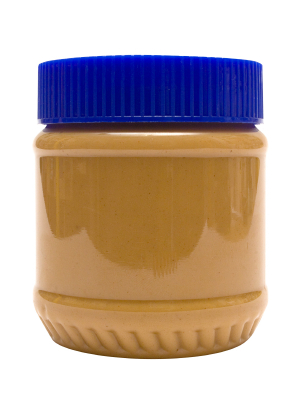
Last Friday, the New York Times reported on the latest headline-grabbing outbreak, this time from peanut butter that originated from a plant in Georgia.

From the New York Times:

For the nation’s grocery shoppers, the list of foods that might contain salmonella-tainted peanut butter has grown so quickly that keeping up seems daunting. 

There are boxes of Valentine’s candy, frozen cookie dough and dog biscuits, chicken satay, peanut butter cups and stuffed celery. 

Many of the products are sold as supermarket brands or under lesser-known national labels, but the list also has some of the more popular snacks on the shelf, like Little Debbie sandwich crackers, Famous Amos cookies and energy snacks from Clif Bar and NutriSystems. 

The Food and Drug Administration has listed almost 130 products that have been recalled, but federal officials say the list is likely to grow as the investigation continues. The large and varied list of products points up the many layers involved in producing packaged foods.

“I don’t think we can determine how many more” products will be recalled, Stephen F. Sundlof, director of the Center for Food Safety and Applied Nutrition at the food and drug agency, told reporters on Wednesday.

Out of 486 cases of salmonella illness reported to the Centers for Disease Control and Prevention, 6 people have died and 107 have been hospitalized. The most recent person sickened fell ill on Jan 8. Since it takes up to three weeks for cases to be reported to the disease agency, more are expected.

Consumers who have packages of food made with peanut products should check with the manufacturer by Web site or telephone and consult the F.D.A. recall list at fda.gov. Anyone who is not sure about a product should not eat it, federal officials said.

[...]

The plant also produced peanut paste, a more concentrated product used in candy, crackers and many other kinds of foods. Tracking how the paste travels through the food supply can be challenging, because several companies can be involved in making the final food. For example, one manufacturer might coat the paste in chocolate and make a peanut butter cup, which is then sold to another company that mixes it into ice cream that may or may not also contain peanut butter. A grocery chain might buy that ice cream and sell it under a private label.

Volume, wide distribution and a complicated supply chain are not the only issues. Salmonella can survive for a long time in a closed container of peanut butter.

“The piece that hasn’t come out yet is that peanut butter isn’t like spinach or ground beef because it has a really long shelf life,” said Caroline Smith DeWaal, food safety director for the Center for Science in the Public Interest.

So remember: eat local. Contribute to the local economy, make an impact on CO2 emissions, avoid GM foods, and greatly reduce the risk of suffering a pretty lousy fate at the hands of an industrial food supply contaminant.

Read the whole Times article here.

Sunday, September 28, 2008

The Week in Green

I decided that there is so much "green" news out there each week that I would update you on what I think are the most interesting stories and topics.  So each week I will publish "The Week in Green."

If there is something that you think is interesting, topical or important, please post it to the comments here, on my Facebook Group (Green Luvin') and/or my Facebook blog, Green Luvin'.  You can also follow me on Twitter @Green_Luvin.

The Week in Green...

Be Green and Vote:  In most states you have until the end of the week to register to vote in the Presidential election.  Some say "why should I vote"?  No matter if you are a Republican or a Democrat, an environmentalist or a creationist (not sure why anyone would be), you MUST exercise your right to vote.  In this week Grist, Umbra Fisk wrote a piece called Citizen Bane: On the importance of voting.  A must read for all and if you have not registered to vote go to Declare Yourself to find out your state's deadline and all you need to register.


Bush's Environmental Record:  In a week that has once again exposed the incompetence of the Bush administration, the Republicans have boycotted a review of Bush's environmental record, as reported by the Environmental News Service. All of us know this administration has failed the American people on environmental and health issues while letting big business run rampant without oversight.  "For six years the administration sat by while oil imports increased, gas prices rose and global warming became more and more threatening," said Sierra Club Executive Director Carl Pope. "It refused to set higher fuel efficiency standards for vehicles even when the data showed that the current trajectory was actually hurting the U.S. auto industry, desiccating its market share."

Fast Food is transforming the waistlines of the Greek: Our fast and highly process foods are making the U.S. a nation of the overweight, sick and obese. We have been told that the healthful Mediterranean diet — emphasizing olive oil, fresh produce and fish -- is the way to go. But as reported in the New York Times this week, the Greeks have succumbed to our ways and are now seeing increased negative health effects from the change in their nation's diet.  So much so that the government has began lectures on nutrition in schools.  As stated in the article, "In Greece, three-quarters of the adult population is overweight or obese, the worst rate in Europe “by far,” according to the United Nations. The rates of overweight 12-year-old boys rose more than 200 percent from 1982 to 2002 and have been rising even faster since."  

The reusable shopping bag, green or not?:  If you're reading this, and you are, you probably have about a half a dozen or so reusable shopping bags.  Those of us who do, proudly bring them to the supermarket making our statement that we are taking one step in reducing waste and helping the environment. According to a story in the Wall Street Journal this week entitled "An Inconvenient Bag," reusable shopping bags are the new "it" freebie.  Sales are up 76% from this time last year.  Wow, what a business, but is it a green business? "Many of the cheap, reusable bags that retailers favor are produced in Chinese factories and made from nonwoven polypropylene, a form of plastic that requires about 28 times as much energy to produce as the plastic used in standard disposable bags and eight times as much as a paper sack, according to Mr. Sterling, of Natural Capitalism Solutions.

Reclaiming Cow Shit for Energy:  So many people dis on the cow because they feel that bovines are a leading causes of global warming.  They burp and fart methane. Well, a farm in Vermont is now taking the waste from their cattle and converting into clean burning natural gas to create a new and recurring source of green energy. The Green Mountain Dairy in Shelton, Vermont is part of an alternative energy program that converts methane from cow manure in to electricity.  Check out this interesting and progressive program by reading  Electricity From What Cows Leave Behind in the New York Times, The Business of Green section.

By the way, please don't print these stories out to read them.  Save the paper and read them online.

Tuesday, September 9, 2008

New study finds that you don't have to overeat to become obese.


Pollution contaminates our water, air, and land. It has been proven to cause asthma, allergies, cancer, emphysema, and whole host of other diseases. It causes global warming, kills our wildlife and now scientist from the Environmental Epidemiology at the Institut Municipal Investigacio Medica in Barcelona discovered it causes OBESITY.  

So in addition to fast foods and processed foods, pollution causes obesity? The Spanish study revealed that children who were exposed to a range of common chemicals and pesticides in the womb increased the childs chances of becoming obese. 

As reported in the journal Acta Paediatrica, scientists looked at the concentration of hexachloreobenzene (HCB) in the umbilical cord blood of 405 children born in Menorca from mid-1997 to mid-1998. Among those data point collected post birth, scientists looked at infant height and weight.  Feeding practices were reported by mothers in interviews at six months and one year after birth.  Additionally, the children’s height and weight were measured when they were 6.5 years old. The study revealed that children with the highest exposure to HCB were 2.5 times more likely to be overweight. The researchers also reported that these children were three times more likely to be obese than those with lower exposure levels. 

So, what is HCB? Hexachlorobenzene is a fungicide formerly used to treat seeds to control fungal disease. It was banned globally in the '90s under the Stockholm Convention which banned chemical substances that accumulate through the food chain, and pose a risk of causing adverse effects to human health and the environment. HCB has been banned in the US since 1965 but can still be found in our environment in 84 Superfund sites in the US and all across the world. It is a known animal cancinogen and a probable human carcinogen. Studies have found that HCB accumulates as your move up the food chain. Just like mercury, as it goes up the seafood food chain, HCB concentrations increase. Therefore, if you eat a large fish like tuna or swordfish that has been contaminated up the food chain, the concentrations of HCB would be extremely high.

So what else have children been exposed to prior to being born, and what impact might it have on my kids?

Previous studies have linked bisphenol A exposure to obesity in animals, and other studies have linked phthalates to obesity in adult men. As reported in the Telegraph in the United Kingdom, "The report's authors are now calling for exposure to similar pesticides to be minimised, including bisphenol A (BPA), used in baby bottles and cans of food, and phthalates, found in cosmetics and shampoos." Tests have shown BPA is found in 95% of Americans, while 90% have been found to be exposed to phthalates in the womb.

Between BPA, HCB, and phthalates, I'm frustrated and concerned. I would prefer to screw my kids up on my own and not worry about what their sippy cups or shampoos are made of, or what banned fungicides are in their foods.

What's keeping you up at night?

Saturday, May 17, 2008

What is Truvia?

Today our food is over-processed and contains artificial ingredients and sweeteners. Reading the ingredients labels on most foods in the supermarkets makes me feel illiterate, Dimonowhat? Polyglycolichuh?

Years ago everything contained sugar.  Then saccharin (Sweet'N Low) came into vogue as a "dietetic" alternative to plain cane or beet sugar--remember TaB?  Then, when that was found to cause cancer the big switch was to aspartame, (NutraSweet or Equal).  In 1999 sucralose was introduced to the market and the Splenda symbol appeared on every processed, low calorie food on the market--my husband, until recently used Splenda in his coffee everyday.

So when I heard that Cargill, the company that in March, CondeNast Portfolio listed as one of "The Toxic Ten" (one of the worst corporate polluters in America) and Coca Cola, who has basically put America on an intravenous (IV) line of high fructose corn syrup, were coming out with a new sweetener, you can bet I was a little skeptical.  Like we need another zero-calorie, chemical, no-value sweetener on the market.  

Well, this new sweetener is called Truvia. Truvia is made of rebiana, a sweetener derived from the leaves of stevia plant.  Native to South and Central America, stevia is grown for its sweet leaves.  The stevia extract turns out to be more than 300 times sweeter than sugar. Stevia leaves are harvested and dried, and are steeped in fresh water in a process similar to that of making tea. According to Cargill and Coke, Truvia is a natural sweetener. However, what the companies fail to explain is how the steeped leaves then get to the consumer in a bag looking like a table sweetener.  It must be processed in some way, no? So I am not sure how natural Truvia really is.

Cargill and Coke are currently waiting FDA approval to sell stevia as a sweetener. It is currently only allowed to be used as a supplement in the U.S. -- supplements are not regulated by the FDA, and as such are not widely accepted by the public.  Stevia has been used in Japan for over 100 years.

Wanting to know more about Truvia,  I jumped on the opportunity to listened in on a "webinar," (web conference call), with Coke and Cargill last week. The call included Leslie Curry, Regulatory and Scientific Affairs Director for Cargill Food and Ingredient Systems, Zanna McFerson, Business Director for Cargill Health & Nutrition and Dr. Rhona Applebaum, Vice President & Chief Scientific and Regulatory Officer for The Coca-Cola Company.  These were basically hired cheerleaders for Truvia.  

What did I learn from more than 30 minutes listening in?  Almost nothing.  Coke and Cargill have done safety studies on the use of rebiana.  The companies say that it is safe to eat. I'm dubious.  I do not think that any of these tests look at the actual amounts consumers consume. Coke and Cargill have big commercial hopes for Truvia beyond just liquid crack, I mean Coke. Think ice cream, yogurt, cookies, and more -- all hitting our sweet tooth cravings.  If these wonderful companies have their way, many Americans will be taking in stevia or Truvia in nearly every meal and snack they eat.  That impact of that amount of Truvia on the body can not really be determine without many years of studies.  

To find out more about stevia, I did some digging on the internet. I was curious as to why stevia was banned in the U.S and Europe as a sweetener but Japan has used it for decades. From my research, it appears that stevia is actually a better substitute from the chemical processed sweetners (asparatame and sucralose) on the market today.  More importantly, what I discovered about the politics behind this sugar-substitute was very interesting.  

In the 1980's numerous companies in the U.S were interested in using stevia in their products. In 1991, the FDA banned the importation of stevia for use in foods.  According to numerous papers that I read, this was at the request of NutraSweet (owned by evil Monsanto who brought us Agent Orange, PCBs, genetically engineered seeds, sacchrin, aspartame, nuclear weapons, and human growth hormones in milk cattle).  The power of Monsanto kept stevia out of the country banning it for almost 20 years.  By the way, the FDA ignored published studies on the dangers of aspartame prior to its approval by the agency.  God bless the United States of Corporate America!

Now I do not trust any of these companies, Monsanto, Cargill or Coke, but from what I have read and heard, Truvia may not be all bad. Cargill and Coke are ramping up farming and production of stevia in South America and China. If Truvia is truly a natural zero calorie sweetener then it could become huge. We could see fields of stevia all over the world.  This could be good and bad.  It would bring money to some communities that need it, and it could also wreak environmental havoc due to poor farming practices.  According to the Truvia website, the plant will not be grown organically.  As stated, "While rebiana is natural and comes from a plant, it is not certified or grown organically at this time.  That could happen in the future, depending on consumer demand."  The idea is to have an "all-natural" zero-cal sweetener, and they are not growing it organically?  I don't get it.  Why not do it right from the beginning?  These are two companies that generate billions of dollars of year, and will probably have the exclusive rights to use this "wonder sweetener" and are not going to grow it organically?

Crazy.

Beyond that, this whole thing gets me wondering.  If stevia was blocked from our consumption by Monsanto nearly 20 years ago, and its better for us than chemicals like aspartame and saccharine, then what else has have we been denied for the almighty dollar?

Tuesday, April 29, 2008

Corn: How can one food lead to both obesity and starvation?

Corn: it makes us fat, makes our cows sick, degrades our land and now it is causing a food crisis. How can one crop cause both obesity and starvation? Can a plant be evil?

Well, as we all know, and as I wrote about in my "King Corn" post, corn is the basic building block of most of our food. But with mountains of corn, all that processed food and high fructose corn syrup, how can there be global a food crisis? Think about this, there are people RIOTING in the streets because there is not enough food to eat!

Due to the poorly conceived energy policies of the United States and European Union a tremendous amount of corn is being converted to biofuels (think ethanol). The acreage being used to grow fuel corn is contributing to the explosive rise in global food prices.  Many farmers are growing corn for your gas tank and not your belly.

Yesterday the United Nations said that fuel policies pursued by the U.S. and the EU were one of the main causes of the current worldwide food crisis. So now, not only are we fighting for oil in Iraq, but Iowa isn't feeding us anymore, its feeding Ford's, Chevy's and Toyota's.

Jean Ziegler of Switzerland, UN special rapporteur on the right to food and a professor of sociology at the University of Geneva and at the Sorbonne in Paris, said "that last year the United States used a third of its corn crop to create biofuels, while the European Union is planning to have 10 percent of its petrol supplied by biofuels."  To me, that's both pretty amazing and scary.  Thirty-three percent of all the corn grown in the US is going to run our cars.

When speaking with Voice of America, Greg Barrow of the UN's World Food Program stated, "There is a perfect storm that has emerged over this issue [due to] a combination of factors - high fuel prices, high food commodity prices driven by the growth of economies in China and India. Then this phenomenon of biofuels production, where fields that were once used to produce grain for human consumption are now producing grain for fuel."

Food prices have risen dramatically in the last year and we are already seeing a food crisis in Haiti, Cameroon, Egypt, Ivory Coast, South Korea, Bangladesh and the Philippines. And American's are not immune to the crisis.  Both Costco and Sam's Club have begun rationing sales of rice allowing a maximum of two to four institutional-size bags per customer, depending on supply. 

When speaking with the Washington Post, Bruce Babcock, a professor of economics and the director of the Center for Agricultural and Rural Development at Iowa State University said "If you didn't have ethanol, you would not have the prices we have today. It doesn't mean it's the sole driver. Prices would be higher than we saw earlier in this decade because world grain supplies are tighter now than earlier in the decade. But we've introduced a new demand into the market."  And the astounding thing is, ethanol is not an efficient source of fuel and might be exacerbating global warming. 

According to the Associated Press, even President Bush-- that well knowing environmentalist--said biofuel is responsible for about 15 percent of the rise of food prices. However the U.S. Department of Agriculture believes it to be more around 20 percent. And the International Food Policy Research Institute and Ziegler says it is 30 percent. Leave it to Bush to underestimate a crisis.

Then of course there is the biofuel industry that says that biofuels have only brought food prices up 4 percent. But who are they kidding. It is in their best interest to keep the corn flowing to their chemical vats, and the fuels flowing to our cars.

Check out the Associated Press photo above of a pump at an Ohio Department of Agriculture fuel station in 2006 that is 85% ethanol and 15% petroleum. Currently gasoline contains up to 10% ethanol. If the biofuel industry had it their way all our pumps would look like the one in the photo.

Ziegler and other international scientist have called for a moratorium on the production of biofuels. But of course Bush believes the opposite. Good thing he is a lame duck!

What do you think?


(pump image by Kiichiro Sato, AP)

Wednesday, April 23, 2008

Reducing our Carbon Footprint is Critical: Take Action

I was watching Real Time with Bill Maher the other night with my husband, and the hot discussion was global warming. Bill and his guests were talking about how the current adminstation has done nothing.  Basically addressing global warming has been put on hold because Bush wants the next President to make the hard choices required to deal with it. Richard Clarke, the counter terrorism czar, was on the panel and he said something that really stuck in my head.  

"The real problem is, the last eight years were probably the critical years where we might have done something. And, you know, when we look back – and my book is about government failure, and I say in it, the biggest failure probably that has ever happened of the American government is the failure to do something about global warming. Because the consequences are going to be staggering. And the time when we could have done something about it has probably passed. You know, we should still try. But, the time when we could have really done something to mitigate carbon emissions, the president was saying there wasn’t a problem."

Ok, we all know Clarke really dislikes the President (and so do I) so his statement is more than a little slanted, but I do agree that the clock is ticking. We are approaching "midnight". So the question is have we reached a tipping point where we can't do anything to reverse global warming?

I hope not.  Global warming is a huge and scary issue. Fifteen years ago or so when anyone talked about climate change and global warming, it was hard for us to grasp the concept--what we were told was about the hole in the ozone layer-- because we did not see any changes. But now we see how our weather is changing, think Katrina. If our government is not going to do anything we as individuals MUST take matters into our own hands.

The Environmental Defense Fund released a new analysis that revealed that the overall cost of capping greenhouse gases for the average American family will amount to less than one percent of household budgets over the next two decades. To put this into perspective, assume your family has an annual income of $75,000.  We're talking less than $750 dollars a year.  The anticipated cost to the U.S. economy of reducing emissions is small, even difficult to measure against projected economic growth, but the most expensive policy by far is to do nothing at all

 Another study just release conducted by researchers at Carnegie Mellon revealed that our dietary choices, not food miles (how long food travels from production to consumption), determine a household's food-related climate impacts. So eating a cow raised on industrial corn is worse for the environment than eating a Mango from Mexico shipped to your grocery store.  

The researchers report that fruit, vegetables, meat and milk produced closer to home rack up fewer petroleum-based transport miles than foods trucked cross country to your table. Yet despite the large distances involved the average distance traveled for food in the U.S. is estimated at 4,000-5,000 miles ­the large non-energy based greenhouse gas emissions associated with producing food make food production matter much more than distance traveled. So the energy used to grow feed, fertilize, slaughter and transport is much more than the energy used to import fruits and veggies to the U.S.

Researchers Christopher L. Weber and H. Scott Matthews suggest that eating less red meat and/or dairy products may be a more effective way for concerned citizens to lower their food-related climate impacts. Moving to a diet that is entirely local would reduce the equivalent greenhouse gas emissions as driving 1,000 miles, while changing only one day per week’s meat and dairy-based calories to chicken, fish, or vegetables would have about the same impact. Shifting entirely from an average American diet to a vegetable-based one would reduce the same emissions as 8,000 miles driven per year.


We're doing our part.  We've joined a CSA (community supported agriculture farm) to lower our dietary carbon footprint and eat locally grown fruits and vegetables. Additionally, we've made a commitment to grow as much of our own food as we can in our family garden. 

So, what are you going to do? 

(Click on the image above by Learning Fundamentals to see different things you can do to help solve global warming)

Friday, April 4, 2008

King Corn: We are what we eat.

Corn, it is hot news these days. With crops at record prices and grocery bills rising everyone is looking at the corn industry. 

Corn is in almost everything we eat. Livestock is fed corn, farmed fish are fed corn, processed food are made of corn and the mighty sweeter, high fructose corn syrup (HFCS), is made of corn. Corn is even used to fuel our cars in the form of ethanol thanks to a poorly thought out government policy.

Well for those of you are interested in an introductory course on the corn, two college friends, Ian Cheney and Curt Ellis, filmed a documentary on the industry called "King Corn." This pretty amazing film will air on PBS on April 15th. 

What's the story here? Well, Ian and Curt decided to move to Iowa in 2003 for a year to plant one acre of corn to follow it from seed to table. What they find out raises scary questions not only about what Americans eat but also how our agriculture is farmed. 

Their journey takes them first to have their hair carbon tested at the University of Virginia to discover that their bodies are made out of more than 50% corn! From Virginia, they venture to fields of Iowa where acres and acres of farmland are planted with corn and the grain elevators are overflowing with corn. Then to the grasslands of Colorado where cattle use to graze.  The fields are now cornfields that feed the cows in feed-lots.  Ian and Curt look at every part of the corn production cycle. They even speak to a high fructose corn syrup producer who thinks the liquid sweetener is the best invention since sliced bread.  

Corn is a commodity and Ian and Curt learn this very quickly when they taste their industrial corn for the first time.  It was inedible! They discover for their corn to become any type of food it must be processed.  

The film is in large part a homage to Michael Pollen, author of The Omnivore's Dilemma. In "King Corn," Pollan states, "If you take a McDonald's meal, you don't realize it when you eat it but you're eating corn. Beef has been corn-fed. Soda is corn. Even the French fries -- half the calories in the French fries come from the fat they're fried in, which is liable to be either corn oil or soy oil. So when you're at McDonald's, you are eating Iowa food. Everything on the plate is corn." 

The agriculture system today is a result of America's government subsidized farm program.  In 1973, Secretary of Agriculture Earl Butz declared, "What we want out of agriculture is plenty of food."
 
Well, we have plenty of food but our nutritional supply has degraded. When Ian and Curt speak with one of the Iowa farmers about their crops, the farmer admits that they do not eat their corn.  As he states in the movie, "We aren't growing quality, we are growing crap."

Ian and Curt's acre harvested 10,000-pounds of corn which could yield 57,348 cans of soda or 3,894 corn-fed hamburgers.  Sixty-three percent of their harvest went into feed for livestock, 32% into ethanol and 5% into sweeteners like HFCS.

A great visual into to corn industry and the American food system, "King Corn" should become required viewing for all schools across the country to teach children to eat better.  

"King Corn" will air on PBS on April 15th at 10:00 PM.  You can also purchase the DVD on their website.  

Thursday, February 21, 2008

The Whole is More than the Sum of its Parts.


So I finally finished Michael Pollan's most recent book In Defense of Food: An Eaters Manifesto, a follow-up to  The Omnivore's Dilemma. In this new book Pollan explores what we should eat now and sums it up in seven words -- Eat Food. Not Too Much. Mostly Plants.

However, more important than his conclusion of what to eat are Pollan's discussions of "The Age of Nutritionism." Nutritionism, coined in 2002 by the socialist, Gyorgy Scrinis, is a reductionist look at food -- understanding food in terms of its nutritional content.  

Many years ago I saw a movie called Mindwalk, one of the most philosophical and thought-provoking movies I have ever seen. The movie is based on the teachings of Fritjof Capra, a physicist and system theorist, and his book The Turning Point where he discusses the flaws of reductionist, Cartesian dualism, Newtonian paradigms and shows how modern society needs to develop holistic theories to solve today's problems. Basically the movie shows us that the way society looks at everything (global warming, deforestation, water pollution, etc.)  is by taking the issues apart piece by piece, mechanistically, and that we need to look at social issues as a whole rather than the sum of its parts.

Well, we are seeing this type of thinking with the rise of 'nutritionism' in the food we eat, and the way food science is trying to get us to think.  For example, walk down the aisles of the supermarket and you will see hundreds process food packages touting some nutrient or lack of nutrient claim -- now with antioxidants, vitamin rich, calcium added, low fat, no sugar added, low carb, no carb, low sodium, no trans fats...the list goes on.   (For a great commentary on these claims, read Mark Sisson's Daily Apple post on Ridiculous Health Claims, Mark's Daily Apple goes to the Grocery Store.) 

As Scrinis states, "Processed foods are often fortified with vitamins and minerals, or stripped of some of their fat, to enable such nutrient-content claims to be maid.  Nutrient claims on the labels of processed foods and drinks conceal the fact these foods are typically high in added fat, sugar, salt, chemicals, additives and reconstituted  ingredients, and have often been stripped of a range of beneficial micro-nutrients and food components. " (Sydney Morning Herald, Op-Ed, 2006

Our society has completely reduced the way we look at food into the nutrients or micronutrients -- whether good or bad.  Doing so has blurred the distinction between whole foods and processed foods.  A perfect example is Diet Coke Plus, diet soda with added nutrients.  Come on, diet soda with nutrients?  Who are they trying to fool?  So now we are getting our nutrients from a no-calorie drink?

We are now looking for processed foods for our "nutrients!"  Have we have completely forgotten how food grows?  Why fresh food, from the ground, grown without petroleum-based pesticides, petroleum-based fertilizers is better for us than processed junk?

We need to remember the lessons of Capra and systems/holistic thinking.  Its connectedness and relationship to the earth, soil, sun, water, humans, etc.  It's a system that works as a whole and cannot be reduced to its smaller parts. Humans, plants, animals and the environment are a community that all work in concert with each other.  When we change one part, we change the perfect system. 

As Pollan state, "...food reveals itself for what it is: no mere thing but a web of relationships among a great many living beings, some of them human, some not but each of them dependent on the other, all of them ultimately rooted in soil and nourished by sunlight. ...the relationship between the plants and the soil, between the grower and the plants and animals he or she tends, between the cook and the growers who supply the ingredients, and between the cook and the people who will soon come to the table to enjoy the food.  It is a large community to nourish and be nourished by." (In Defense of Food, pp. 200-201)

So the next time you go to the supermarket and are about to buy Baked Lays or Kellogg's Whole Grain Pop Tarts, think about it for a moment before putting it into your cart.  Think about the provenance of the pop-tart.  Think about its components.  How they got there, how they were processed.  Think about all the energy needed to make something that's not "natural."  And finally think about if you want you, your family, your kids and your community to to be eating this stuff.

If have not had a chance to read In Defense of Food, read The New York Times Magazine, Unhappy Meals by Michael Pollan that is basically an overview of the book.

ShareThis