Thursday, January 29, 2009

Guest Blogger: Leslie Hatfield of the Green Fork blog on the FDA and Mercury in High Fructose Corn Syrup

There are so many good green bloggers out there I wanted to introduce you to another blogger that I really enjoy reading. Leslie Hatfield is the freelance editor of the Green Fork blog and serves as media consultant for Eat Well, a NYC-based nonprofit program which promotes the sustainable food movement and helps people find good food through their online directory of farms, restaurants and other outlets of locally-grown food. Leslie has also contributed to Edible Chesapeake and The Ethicurean.  

"Our Melamine: There’s Mercury in High Fructose Corn Syrup, and the FDA Has Known for Years"

Maybe Jeremy Piven didn’t get mercury poisoning from fish at all — according to the results of this new study released by the Institute for Agriculture and Trace Policy (IATP), the actor may well have been sickened by soda or candy or anything that contains high fructose corn syrup, which, if you eat processed food in this country means, well, just about anything.

Foodies and nutritionists alike have been griping about high fructose corn syrup for years, and the industry has responded with an “astroturf” campaign and a level of secrecy generally reserved for the military officials or secret societies (see Corn Refiners’ Association president Audrae Erickson’s stonewalling performance in King Corn).

Of course, I wouldn’t want to show my hand either, if the making of my product could be described as undertaking a small “Manhattan Project” (see eye-glazing production info here). But as it turns out, the HFCS industry has been hiding some major skeletons in its closet — according to the IATP study (pdf), over 30% of products containing the substance tested positive for mercury.

What makes this news truly shocking is not just that the manufacturers of high fructose corn syrup would put consumers’ health at risk, but that the US Food and Drug Administration (FDA) knew about the mercury in the syrup and has been sitting on this information since 2005.

Here’s the connection, according to the IATP press release (pdf) announcing the study: The IATP study comes on the heels of another study, conducted in 2005 but only recently published by the scientific journal, Environmental Health, which revealed that nearly 50 percent of commercial HFCS samples tested positive for the heavy metal. Renee Dufault, who was working for the FDA at the time, was among the 2005 study’s authors.

Here’s how the mercury gets in there, according to Janet at the Ethicurean:
How did the heavy metal get in there? In making HFCS — that “natural” sweetener, as the Corn Refiners Associaton likes to call it — caustic soda is one ingredient used to separate corn starch from the corn kernel. Apparently most caustic soda for years has been produced in industrial chlorine (chlor-alkali) plants, where it can be contaminated with mercury that it passes on to the HFCS, and then to consumers.
And here’s more from the press release:
“While the FDA had evidence that commercial HFCS was contaminated with mercury four years ago, the agency did not inform consumers, help change industry practice or conduct additional testing.”
And on why it matters:
“Mercury is toxic in all its forms,” said IATP’s David Wallinga, M.D., and a co-author in both studies. “Given how much high fructose corn syrup is consumed by children, it could be a significant additional source of mercury never before considered. We are calling for immediate changes by industry and the FDA to help stop this avoidable mercury contamination of the food supply.”
In China, heads might roll over a scandal like this one, at least if the country received global attention for its allowing corrupt health officials’ greasy palms come before, um, public health.

Of course, in this country, the FDA’s neck is safe. But what about the health of American consumers? Let’s see the Corn Refiner’s Association try to spin this one.
Originally posted on January 27th 2009 on the Green Fork blog.

Drum roll please:  The Corn Refiner's Association rebutal...as stated in a press release entitled HFCS Mercury Study Outdated; Based on Discontinued Technology, “This study appears to be based on outdated information of dubious significance. Our industry has used mercury-free versions of the two re-agents mentioned in the study, hydrochloric acid and caustic soda, for several years. These mercury-free re-agents perform important functions, including adjusting pH balances,” stated Audrae Erickson, President, Corn Refiners Association. “For more than 150 years, corn wet millers have been perfecting the process of refining corn to make safe ingredients for the American food supply.” The full press release can be read here.  

Not sure how that explains the results of the IATP study that found that nearly one in three of 55 brand-name foods bought off the shelves in 2008 contained mercury. The chemical was found most commonly in HFCS-containing dairy products, dressings and condiments.

I think the corn has just spun off the cob.  


Wednesday, January 28, 2009

Guest Blogger: Dennis Pacheco of ChelseaGreen.com on Eating Local or Risk Death?

We have a guest blogger today.  Dennis Pacheco is Web Content Coordinator for ChelseaGreen.com, the Web site of premier sustainability publisher Chelsea Green Publishing. Their books include Sharing the Harvest and Fresh Food from Small Spaces, and they distribute contra-farmer Joel Salatin's books (Everything I Want to Do Is Illegal and others). 

Readers of the Green Luvin' blog probably don't need another inducement to "eat local." Like Chelsea Green's audience, you're probably hip to the whole concept: support local farmers, enrich your community, connect directly with your food, avoid GMO as much as possible (Although they are difficult, if not impossible, to avoid entirely—soy products, anyone?), cut carbon emissions and reduce demand for our dwindling supplies of dirty fossil fuels, etc., etc. But just in case you're having trouble making the case with some of your less sustainability-minded friends, here's a good one: don't get really sick and possibly die.

You hear news reports all the time about Salmonella outbreaks in spinach or some other product that probably originated halfway around the country or halfway around the world, but what exactly is it?

While not always fatal, it's also not pleasant.

From CDC.gov:

Salmonellosis is an infection with bacteria called Salmonella. Most persons infected with Salmonella develop diarrhea, fever, and abdominal cramps 12 to 72 hours after infection. The illness usually lasts 4 to 7 days, and most persons recover without treatment. However, in some persons, the diarrhea may be so severe that the patient needs to be hospitalized. In these patients, the Salmonella infection may spread from the intestines to the blood stream, and then to other body sites and can cause death unless the person is treated promptly with antibiotics. The elderly, infants, and those with impaired immune systems are more likely to have a severe illness.

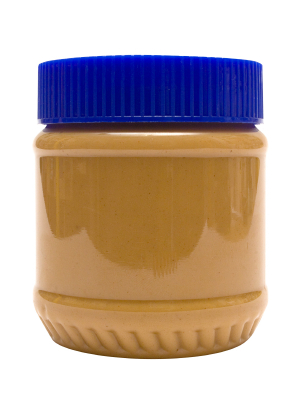
Last Friday, the New York Times reported on the latest headline-grabbing outbreak, this time from peanut butter that originated from a plant in Georgia.

From the New York Times:

For the nation’s grocery shoppers, the list of foods that might contain salmonella-tainted peanut butter has grown so quickly that keeping up seems daunting. 

There are boxes of Valentine’s candy, frozen cookie dough and dog biscuits, chicken satay, peanut butter cups and stuffed celery. 

Many of the products are sold as supermarket brands or under lesser-known national labels, but the list also has some of the more popular snacks on the shelf, like Little Debbie sandwich crackers, Famous Amos cookies and energy snacks from Clif Bar and NutriSystems. 

The Food and Drug Administration has listed almost 130 products that have been recalled, but federal officials say the list is likely to grow as the investigation continues. The large and varied list of products points up the many layers involved in producing packaged foods.

“I don’t think we can determine how many more” products will be recalled, Stephen F. Sundlof, director of the Center for Food Safety and Applied Nutrition at the food and drug agency, told reporters on Wednesday.

Out of 486 cases of salmonella illness reported to the Centers for Disease Control and Prevention, 6 people have died and 107 have been hospitalized. The most recent person sickened fell ill on Jan 8. Since it takes up to three weeks for cases to be reported to the disease agency, more are expected.

Consumers who have packages of food made with peanut products should check with the manufacturer by Web site or telephone and consult the F.D.A. recall list at fda.gov. Anyone who is not sure about a product should not eat it, federal officials said.

[...]

The plant also produced peanut paste, a more concentrated product used in candy, crackers and many other kinds of foods. Tracking how the paste travels through the food supply can be challenging, because several companies can be involved in making the final food. For example, one manufacturer might coat the paste in chocolate and make a peanut butter cup, which is then sold to another company that mixes it into ice cream that may or may not also contain peanut butter. A grocery chain might buy that ice cream and sell it under a private label.

Volume, wide distribution and a complicated supply chain are not the only issues. Salmonella can survive for a long time in a closed container of peanut butter.

“The piece that hasn’t come out yet is that peanut butter isn’t like spinach or ground beef because it has a really long shelf life,” said Caroline Smith DeWaal, food safety director for the Center for Science in the Public Interest.

So remember: eat local. Contribute to the local economy, make an impact on CO2 emissions, avoid GM foods, and greatly reduce the risk of suffering a pretty lousy fate at the hands of an industrial food supply contaminant.

Read the whole Times article here.

Friday, January 16, 2009

Martin Luther King and a 7-Year-Old: Same Dream, Different World

I think this image speaks for itself...

.   

What can you do to make this world a better place? Let me know and I will Twitter about each response as they come it. Or you can just send me a message on Twitter.  You can follow me on Twitter at @Green_Luvin.

Sunday, January 11, 2009

Vote Change One More Time -- For Our Food System

I think many of us agree that our food system is a mess.  Our industrial ways are destroying our environment and health.  We had hope that Obama would pick a Secretary of Agriculture that would be good for our future but that took a down turn. His choice in Tom Vilsack is bad but there appears to be a glimmer of hope, a very small one, that he might become the Secretary of Commerce as reported by the New York Daily News the other day. But to date it appears that is is all rumor. Check out my new favorite blogs, Obama Foodorama, for an explanation on why the Vilsack move is the best choice for America's food system.  I can tell you we are hoping Obama is listening. 

Now there has been a lot of talk lately that the overhaul of our food system is going to take a back burner to the economy. But as Michael Pollan and Grist's Tom Philpott argue, and I agree, investing in a new food system should be part of the economic stimulus package. Ignore it and we continue along, on our way to massive environmental and public health catastrophes. 

In a recent article entitled "Eat the Stimulus," Philpott lays out a plan to overhaul America's food system that he believes would not require a new program or major expenditure of political capital. In short, Philpott suggest that a bulk of the economic stimulus package should go to support local and regional food systems. "Reviving that infrastructure would significantly lower costs for the sort of pasture-based, sustainable meat farmers who are now badly undercut on price by large-scale, environmentally ruinous producers," writes Philpott. He also recommends a reinvestment in our school cafeterias and feed our children healthy, unprocessed food --teaching them that our food comes from the earth not a grocery store. Sounds like a great plan to me but I feel that us sustainable foodies have an uphill battle. 

One way we can try and make a difference is to be a part of the Change.org campaign. On January 16, Change.org and the Case Foundation are co-hosting an event at the National Press Club in Washington, DC to announce the top 10 rated ideas that have been submitted by Americans across the country. They plan on then launching a national campaign behind each idea using the collective energy of the millions of members of Change.org, MySpace, and partnering organizations to ensure that each winning idea gets the full consideration of the Obama Administration and Members of Congress.

Both Eat the View and The Who Farm have been petitioning the next president to plant an organic garden on the White House lawn.  I previously wrote about them in my post entitled "A Victory Garden at the White House?" The two groups have gotten together to put the idea on Change.org and the idea is currently (as I type) in 24th Place and needs 2861 more votes to be part of the final 10 ideas presented at the event in Washington, DC.  

The idea as stated on Change.org, Victory Garden 2.0:
Thousands of Americans and people from the around the world are asking the Obamas to lead by example on climate change, health policy, economic self-reliance, food security, and energy independence by replanting an organic food garden at the White House with the produce going to the First Kitchen and to local food pantries.

The many successes(1) of the first Victory Garden movement were the result of effective public policy, bold leadership(2) at a time of national crisis, and the commitment of millions of citizens who were ready to roll up their sleeves for the greater good.

There' s no better, more symbolic place for launching a new National Victory Garden Program than at the White House, "America’s House". There's no better, more urgent time(3) than now. And there's NOTHING that can beat the fresh taste of locally-grown, home-cooked foods.
The number one idea on Change.org is "Legalize the Medicinal and Recreational Use of Marijuana." Now I am actually in favor of this idea but I do not believe it is worthy of getting the attention that Change.org plans to put forth. There are much greater and important issues. Having a organic garden at the White House will really put the importance of our food system front and center. And then if a majority of American's follow the lead of growing their own food, our agricultural system will be forced to change without the force of the government.  

So please vote.  Voting ends at 5pm ET on January 15th. You can vote by clicking here or click on the image below.  You must register on the site but in only takes one second of your time.  If all of us vote we can definately put Victory Garden 2.o in the top 10.  Let's help make a change in our food system.

Saturday, December 20, 2008

Soda Lovers Learn Waste Management

On the homepage of the Container Recycling Institute is a counter clocking how many beverage containers have been landfilled, littered and incinerated in the United States. This year alone the counter has tallied over 123 billion bottles and cans. Amazingly, the average American drinks around 60 gallons of soda each year, sadly, only 33-45 percent of those bottles and can get recycled. The environmental toll from the production, packaging and shipping of each soda can and bottle is incredible – the energy wasted in 2001 to produce 50.7 billion soda cans was the equivalent to 16 million barrels of oil!  Our towns and cities are being buried in water and soda bottles and cans. 
 (Image: Rich Pedroncelli/AP)

With the economy in the dumps-- no pun intended-- the problems arising from these drink containers is getting even more severe.  Plainly said, at this moment in time, there is no market for recyclables. Paper, plastic, aluminum, cardboard, all those products we are so proud to put in our recycling bins and put on the curb for pick up are piling up at municipal recycling facilities.  A once lucrative business, recyclers cannot find anyone to buy there "junk".  

According to a December 7th story in the New York Times entitled Back at Junk Value, Recyclables are Piling Up, in some areas mixed paper is selling for $20-25 a ton, down from $105 in October and tin is now $5 a ton, down from $327 earlier this year.  Some towns and cities across country that used to get paid for their recyclables are either not getting their monthly checks or are now being charge to take the junk away.  

I recently spoke with public works representative in my town who told me that our township was getting paid for all our recyclables but the checks had stopped coming.  However, they told me that our town is lucky because we are in a contract with a hauler, so our recyclables were still getting picked up. In many towns without rock-solid contracts, recyclable haulers are refusing to pick up their loads.  

So now what?  Clearly we should not abandon our recycling programs. I know I've painted a bleak picture, but it is really important to continue to recycle.  However, now more than ever, the first two of the 3 "R's"s are increasingly more important.  We need to REDUCE and REUSE.
 
Between 1960-79 the average person purchased 200-250 packaged drinks per year. In 2006 that number has soared to 686 drinks (Source: Container Recycling Institute).  We need to turn this around and reach for zero new waste. We need to make consumer choices to buy products that are not only recycled and recyclable, but to buy goods that do not generate more recyclable garbage.  Sounds hard right?  Well in some instances its not as difficult as you might think.

In my house we've taken an interesting step in this direction. We drink a lot of soda water (seltzer).  At least a 1/2 gallon a day.  Now my husband and I used to drink Peligrino by the case.  Doing so would put at least 6-8 glass bottles back into the garbage/recycling stream on a weekly basis. In addition, our sparkling water traveled thousands of miles to reach us. A gallon of Peligrino costs over $7.50 per gallon, much more than gasoline. 

Recently, we got the opportunity to try out Sodastream Soda-Club, a home seltzer and soda-making machine. The machine is already helping eco-conscious consumers elsewhere - 30% of German and 24% of Swiss households have soda machines and have reduced their waste.  With a Soda-Club machine, we drink freshly made, great tasting seltzer and we are drastically reducing waste from store-bought cans and bottles. The machine uses no batteries or electricity, just a 14.5 oz CO2 canister that can make up to 60 liters of seltzer or soda. Empty carbonators are returned to Soda-Club to be cleaned, inspected and refilled with CO2 drawn naturally from the air. Carbonators are reusable as long as they remain in good condition. 

We tried a machine that is called the Penguin. This little marvel comes with 2 glass carafes. Other versions come with clear plastic (PET), BPA-free reusable bottles will about 3 years. Each bottle also comes with a special cap with a hermetic seal that keeps your soda carbonated long after you first open it and it really works. 

The machine's also come with regular, diet and caffeine-free flavors to make cola, root bear, cherry soda and many more. In addition they have fruit essence to make flavored-seltzer. If you are purist like me these syrups may not pass the test. But for those of you who still need your soda fix, it beats drinking high-fructose Coca-Cola. Regular flavors have 2/3 less carbs, calories and sugar than store-bought sodas, and contain much less sodium. Both regular and diet flavors do contain Splenda®. 

For our household we are sold. We always have fresh bubbly seltzer in the house. Finish a bottle during a meal, just fill the bottle with water, stick it in the machine press the lever and we have seltzer in seconds. According to Carbonrally, we save about 6 lbs of carbon emissions per week (production, bottling, transport) by making our own soft drinks. According to Soda Club, worldwide, they estimate over 10 million units have been sold.  That is huge savings worldwide in carbon emissions, bottles and cans.
  
So if you are like me and want to still recycle but REDUCE your waste dramaticly, I suggest giving a Soda-Club machine a try.  The machines range from about $100 to $230 dollars depending if you order just a machine or a machine with flavors.  All machines come with CO2 carbonators.  It may sound a little steep but the savings on your waste, environmental impact and future costs (pay back depends on how much you drink), it is well worth it.  AND Soda-Club is giving Green Luvin' readers a discount.  Use the discount code MELISSA at check out you will get an additional $5 off after their current holiday discount, a total savings of $25 per machine.  

Friday, November 7, 2008

An open letter to President-elect Obama.

Dear President-elect Obama, 

After a long, hard and contentious campaign you've won the Presidency of the United States. Congratulations. Take a moment to enjoy your success. Ok, that was long enough. Now let's down to business.  

You well know that you have a long hard road ahead of you, but your first order of business is to choose a cabinet that is strong, thoughtful and will move this country in the right direction. In my opinion, and in the opinions of many people like me, administration environmental jobs should a top order of business. Our crumbling economy will not matter if we cannot breath our air, drink our water, or eat our food. Relieving the credit crunch won't make a difference if rates of obesity, cancer, diabetes, heart disease continue to rise. Keeping people in their homes, empowering people to buy new cars will become meaningless unless we fix the food system, the water system, and limit the spread of untested genetically modified organisms (GMOs). That is why I am calling out to you to take a good look at who you appoint as Secretary of Energy, Head Administrator of the Environmental Protection Agency, Secretary of Interior, Secretary of Agriculture and possibly the new position, Climate Change Czar -- or make this a function of the Department of Homeland Defense.

Of all the cabinet level posts you will fill, there is one that is usually a second thought, but in my opinion is as important as State, Treasury and Defense -- the Secretary of Agriculture. Our food system is in dire need of a change and the right person might be able to help begin the overhaul necessary. 

The Secretary of Agriculture oversees food safety and sets farm policy.  He/she makes recommendations to Congress on which crops should be subsidized, how agricultural laws are enforced, crop-land conservation, and setting the nations nutritional standards and even organic labeling. They also oversee our food stamp program, food distribution during disaster relief efforts, the US Forest Service and the food that is fed to our children in school. That's a big job.

I have read that former Iowa Governor, Tom Vilsack is on the short list for this position. From the corn state, Vilsack strongly supports ethanol subsidies. He believes that he has changed the corn fields of Iowa into energy fields. To me that sounds like a shift in use, not better agriculture or energy policy. As he stated in an op-ed in the Argus Leader, "If you drive across Iowa today, you will see a changing landscape marked by new ethanol and biofuel production plants and wind farms. As a state, we became more economically, environmentally and energy secure." Today, Iowa farmers are still hurting the soil and water by using petroleum-based pesticides and fertilizers. Furthermore, these farmers have shifted corn from feeding the world to ethanol production, which, as we all know, is not helping increase our independence from foreign oil. But with all his good intentions, former Governor Vilsak is too much of an insider to create really change.

I have also read that your short list includes Tom Buis the President of the National Farms Union and the Congresswoman for South Dakota Stephanie Herseth Sandlin. These two are also agriculture "insiders" who are in the pocket of industrial agriculture who might working in the best interest of the farmers they represent, mostly corporate farming, but neither are strong enough or creative enough to achieve real change we need in the system.

Then there is former Congressman Charles Stenholm (D-TX). Charlie is a conservative Democrat that joined the Republicans to kill a bill that would have prevented sick cattle that are unable to walk from entering the US food supply. (Remember the video released by the Humane Society of downer cows?) While part of the House Agriculture Committee he received more than $800,000 in PAC contributions and took numerous trips sponsored by agriculture lobbyist groups. After leaving Congress he became a lobbyist for the agriculture and food industry. Again, not someone who is going to change our system for the better.

So by now President-elect Obama you must say, well then who? There is one man out there who is not already in politics, who has examined our foods system from farm to table, and who understands the impact it plays on our environment, our economy and our health. He has intimate knowledge of not only farmers, but also diaries, feed-lots, and food processors. He is not a Washington insider and to top it off he has already laid out a plan for tackling the issues we face. His plan takes into account the impact agriculture has on our climate, energy dependence, the healthcare system, foreign and trade policies and national security. As states in his own words:
We need to wean the American food system off its heavy 20th-century diet of fossil fuel and put it back on a diet of contemporary sunshine. True, this is easier said than done — fossil fuel is deeply implicated in everything about the way we currently grow food and feed ourselves. To put the food system back on sunlight will require policies to change how things work at every link in the food chain: in the farm field, in the way food is processed and sold and even in the American kitchen and at the American dinner table. Yet the sun still shines down on our land every day, and photosynthesis can still work its wonders wherever it does. If any part of the modern economy can be freed from its dependence on oil and successfully resolarized, surely it is food.
The scribe of this plan called the Sun-Food Agenda is Michael Pollan, the Knight Professor of Journalism at the Graduate School of Journalism at UC-Berkeley, director of the Knight Program in Science and Environmental Journalism and author.

President-elect Obama I urge you to read Professor Pollan's plan as laid out in an article in the New York Times Magazine entitled "Farmer In Chief" and stick with what you have been saying throughout your campaign, that America needs real change. I urge you to consider Michael Pollan for the Secretary of Agriculture. (Or at least consult with him to mine his knowledge on the issues to make the best choice possible for the position.)

Pollan's plans are not liberal.  They are not conservative.  They are what is best for America.  And most importantly they are achievable.

As Pollan states:
[The] sun-food agenda promises to win support across the aisle. It builds on America’s agrarian past, but turns it toward a more sustainable, sophisticated future. It honors the work of American farmers and enlists them in three of the 21st century’s most urgent errands: to move into the post-oil era, to improve the health of the American people and to mitigate climate change. Indeed, it enlists all of us in this great cause by turning food consumers into part-time producers, reconnecting the American people with the American land and demonstrating that we need not choose between the welfare of our families and the health of the environment — that eating less oil and more sunlight will redound to the benefit of both.
This is a new era for America and Michael Pollan may just be The Change We Need.

Yes We Can!

Best,

Green Luvin'

Sunday, November 2, 2008

A Victory Garden at the White House?

The next U.S. president is going to have the daunting task of fixing all that has gone wrong in this country. However, I believe that both candidates are overlooking an extremely important issue -- our food system. As Michael Pollan said on WNYC's Leonard Lopate Show, “It’s true that neither candidate has talked about food policy very much. Some of the issues they have talked about — energy independence, climate change and the health care crisis — I think they will find, as soon as they get into office, that you can’t deal with any of those three problems without dealing with the food system.” 

Last month Pollan wrote an article in the New York Times Magazine which was an open letter to the next president called "The Farmer In Chief" where he laid out what is wrong with our food system and what needs to changed. The article has too many important points to lay out here so please read it.  However, I will highlight one. Pollan concludes his piece with saying that the White House needs to set an example for the rest of the world. I am a firm believer in setting an example for others whether they be our children, our friends or for the next president -- the country.  

Pollan recommends that the next President needs to create a new post -- White House farmer -- who would be in charge of five acres of the White House lawn that would be turned into an organic fruit and vegetable garden. This may sound silly but as Pollan points out back in 1943 Eleanor Roosevelt started the Victory Garden movement, vegetable and fruit gardens planted to ease the burden on the food system during World War II. According to Pollan, by the end of the war more than 20 million home gardens were supplying 40 percent of the produce American's consumed. Victory Gardens today can help reduce our dependence on fossil-fuels and help address the problems of climate change.  

Well Pollan is not the only one who thought of using the White House as a national organic garden  -- two groups Eat the View and The Who Farm are petitioning the next president to plant an organic garden on the White House lawn.  

"Eat the View" is a campaign to plant healthy, edible landscapes in high-impact, high visibility places; whether it's the "First Lawn" or the lawn in front of your child's school. "Eat the View" is coordinated by Kitchen Gardeners International, a Maine-based 501c3 nonprofit network of 10,000 gardeners from 100 countries who are inspiring and teaching more people to grow some of their own food. Roger Doiron the founder of Kitchen Gardeners International just wrote his own letter to the next president entitled "Message to the candidates: Listen to Roger the Gardner" stating the importance of this issue.

TheWhoFarm (aka The White House Organic Farm Project) is a non-partisan, petition-based initiative who is requesting that our next president oversee the planting of an organic farm on the grounds of the White House. The farm will be a model for healthy, economical and sustainable living everywhere and serve as an educational tool and economic aid, and as a means to provide food security in the Nation’s Capitol while reconnecting the Office of the Presidency to the self-sufficient agricultural roots of America's Founding Fathers. TheWhoFarm have been traveling around the country educating Americans on the importance their mission in TheWhoFarmMobile, two school buses fused together with an organic edible garden on the roof.

Instead of a President that loves jelly beans or one that runs to McDonald's to get a Big Mac or one who hates broccoli, how about a president that walks out his front door and picks his own lunch -- or a least his farmer and chef do! Please sign both petitions. You can find the The WhoFarm petition by clicking here and the Eat the View petition by clicking here.

And don't forget to vote on Tuesday.  


ShareThis